In which I think about research and try to get better at talking about the book

I am now 18000 words into novel number 2. This is particularly exciting because about half of those words have been bashed out in the last ten days or so, marking an stratospheric increase in the pace of progress. It also means that I’m having to get my head around the new challenges of book 2, as compared to book 1.

Book 1 was set between 2002 and 2013, and occurred entirely in places where I have actually lived. There was a tiny bit of research involved in making one character, a mathematician, sound like he knew what he was talking about, but that came down to getting a couple of books from the library and reading them. Not too onerous, even for a naturally workshy animal like myself.

With book 2, however, I’ve set a whole section of the story in 1967. Now 1967 isn’t like 1867 or 1267. We’re not into massively unrecognisable “past is another country” territory, but we are ten years before I was born. I’ve shifted into writing about stuff that I don’t remember, and I didn’t live through.

Even though it’s only 46 years in the past, there’s a surprising amount that I don’t know. I need to find out about homes for unmarried mothers, and the Abortion Act, both of which require in-depth research. But it’s not just the big things that form stumbling blocks. In many ways it’s the smaller details that are trickier to make authentic. What did 17 year olds who wanted to look cool drink in 1967? Has the legal driving age changed since the 1960s? What did a pharmacist’s shop look like in a provincial town in 1967?

I’ve tried to make it a little bit easier for myself by setting this part of the story in a place I know really well – the town where I grew up. That’s tricky, in its own way, too. I have to keep checking when certain buildings were built, when they started being used for a particular function, whether it was possible to walk directly from a to b via that route in 1967, as it was in 1987 when I was growing up. Now you might say that that doesn’t matter, that you can fiddle with those details in the name of fiction. And I would say you were right, but, as the writer, I feel like I need to know which details I’m altering and which are absolutely right.

So be warned, any of you who were bright young things in the mid-late 1960s, expect to get badgered with lots of inane questions about your youth when next we meet. And please accept my apologies in advance for how completely annoying that is likely to become.

The other writing challenge I’m working on at the moment, is trying to get better at talking about my work. Writing a novel is such an unbelievably solitary experience. You find yourself living in your own head with only made-up people for company for big hunks of time. Those made up people are often delicate, and prone to damage if brought out and exposed to critical gaze too early or too often. (More thoughts on that quandary here.)

And when you’ve written the thing you have to go out and try to sell it. You have to be able to explain what it’s about in as few, and as interesting, words as is possible. You also have to be able to talk to friends at dinner parties, and in bars, without running back to your husband and hiding when they ask about your writing. Not that I do that. At all. Ever. Very often.

I do find the ‘talking about it’ part of writing incredibly difficult though, simply because you spend so long writing and creating a world, that then discussing it with other people feels like stepping out of the writing bubble into a dark and jagged place where people might tell you that it sounds crap. And that is a wee bit scary. So I’m going to try to offer you a very occasional blog about what I’m writing as a sort of gateway process into actually talking about it to real physical human people. This was the first one. I hope you enjoyed.
In which I look forward to yet another new year

So it’s January again. It seems, dear reader, to have come round a bit quick, but the calendar never lies. Actually that’s rubbish. My calendar says it’s 2010, so can’t really be trusted for anything very much at all anymore. But, depsite my calendar’s confident assertion that it is eternally December 2010, it is, quite clearly, January all over again, and time to do the whole resolution thing once more with feeling.

To get me in the mood for this I had a little lookie back here to see what I’d resolved last year. I won’t lie. It was a tad disheartening, because basically I’m going to be resolving all the same stuff again. I still need to lose weight, about half a stone less than I needed to lose at the start of last year, but the bigger picture is still rather unhealthily hefty. I still need to focus more on writing, and I still need to get over my utter phobia of being in control of a moving automobile.

Now that realisation might give the impression that 2012 was not a successful year. That would not be true at all. 2012 was great. I went to the Paralympics. I gained a very gorgeous niece.  I went to Venice (and Venice is, in my humble opinion, amongst the very best of the good places on the planet). I won a short story competition which earned me a year’s guardianship of a little cup. I saw a panda in Edinburgh Zoo on my 10th wedding anniversary. I joined a tiny little writer’s critique group all of whom say fabulously useful things, and frequently offer me cake. I spent time doing things with people I like.

It wasn’t a year into which no rain fell. My incredible, irrepressible grandmother died at the age of 97 in June. I was poorly for a slightly disappointing proportion of it (rather inconveniently I seem to have developed IBS). And, as we’ve already noted, I didn’t really achieve my stated goals for the year at all.

So maybe that should tell me that resolutions really are a waste of time. Maybe I should stop aiming for things I’m probably not going to achieve, and concentrate on enjoying whatever comes my way. Well, partly. The “enjoying whatever comes my way” sounds good, but I still think the resolutions are worthwhile too. Because, somehow, I absolutely believe that this year will be different. This year I will do better. I think it’s good to believe that – it makes us keep trying. I don’t really do bumper-sticker wisdom. The cute sayings and affirmations that people post on their facebook statuses leave me befuddled, but here’s one I do believe. I believe that it is, pretty much always, better to try and fail, than not to try.

So in a spirit of trying, and embracing the risk of failing, here are my resolutions for 2013:

1. Lose weight – 3 stone 10lb to be precise. And keep it off.

2. Finish writing a second novel, start a third, and submit a competition short story at least once per month.

3. Get over the driving phobia.

4. Get back to blogging every(ish) week. On that note – the all new blog day for 2013 is Wednesday. Mark it on your (possibly decades out of date) calendars – Wednesday. Wednesday. Wednesday.

You never know – this might be the year I stick to all my resolutions. And if not, I’m sure the failing will bring it’s own joys along with it. See y’all back here for a review in 2014?

In which I acknowledge being a bad blogger and offer a small festive story in way of apology

I have been a bad blogger of late. I have failed to offer you Monday thoughts on the Chancellor’s Autumn Statement, David Cameron’s reaction to the Leveson Report, the freakishly rapidly decreasing size of Curly-Wurlys, or the upcoming festive season. And I have thoughts on all these things. Oh yes, indeedy, I have thoughts.

Alas, of late time has been short, and life has been busy so these many and fascinating thoughts have remained unblogged. Please accept my humblest apologies and this short festive storyette in recompense. Normal thought-sharing service shall be resumed in January. Promise.


The Shepherd

“So Bob,” Miss Pennydew shuffles slightly in her seat. “I think you know why we’ve asked you here today.”

“Aye.”

“It’s…” She coughs. “It’s about last Monday. We’ve.. em… we’ve talked to young Sam, but I just wanted to give you the opportunity to take us through your version of events, just as you see it, from your point of view.”

“Aye.”

Miss Pennydew pauses. “Just in your own words…”

“Aye.”

“Whenever you’re ready.” She waits for Bob to fill the silence. The silence extends. “Ok. Well, what if I run through Sam’s account and you can just jump in whenever you think?”

“Reet.”

“So Sam told us, with regard to the incident in question, that he initially noticed an unusually bright star.”

“Aye.”

“And then…?” She tails off. “Ok. And then Sam says…” She consults her notes. “He says that you were surrounded by a heavenly throng.”

Bob nods, apparently feeling that he’s said quite enough already.

“After which one of the…” She makes quotation mark fingers. “…’throng’ addressed you telling you not to fear.”

“Aye.”

“Sam said that this was because a…” She does the fingers again. “…’mighty dread’ had seized your troubled minds.”

Bob pulls a face, suggestive, he hopes, of the notion that Sam might do better with a bit less book-learning and a bit more watching of the flock by night.

“After which, and you’ll understand our concern here, it appears that both yourself and Sam, left the flock and went into town with the intention of visiting a newborn baby, apparently located in a stable.”

“Aye.”

“Just to be clear…” She smiles, the sort of smile that hints at men in white coats and the idea that Bob might like to take a little bit of time off quite soon. “..You didn’t know the family with the baby? They weren’t relatives or close friends?”

“No.”

“You, and Sam, simply decided to leave the sheep, and visit a baby because you were told to by a ‘heavenly throng’.”

“Aye.”

“And, still just so I’m clear – no one’s in trouble here – you hadn’t been erm… drinking at all prior to leaving the flock.”

Bob shakes his head.

“Ok. Not that I’m accusing anyone. I’m sure a little drink every now and then to keep the cold out won’t do any harm, especially at Christmas.”

She pauses and re-runs the sentence in her head. Bob crinkles his brow.

“Anyhow, you do understand our concern, I’m sure. Given that your current role is very much sheep-focussed, any time spent outside of immediate shepherding arena, should really be booked in advance using the green form, which then has to be approved by myself or Mr Hargreaves.”

“Aye.”

“Good. Good.” She does the smile again. “Well, so long as that’s clear.”


In which I consider when critique and comments are useful and when they’re really really not

A blog post for the writers out there this week. I’m heading out in a few minutes to my little writing critique group, where I’ll be offering some comments on a chapter or so of another writer’s children’s novel.  Last time we met the opening chapter of my new work-in-progress (which could, possibly be the next big thing) was up for discussion. Usually I put short stories up for discussion or chapters from a novel that is already close to complete. I’m not sure how helpful critique on writing that is still very much in development really is.

My ideal writing and critiquing pattern goes something like this.

1. Write a first draft.

2. After a short hiatus read through first draft and deal with the horrendously glaring problems. You know the sort of thing, characters that age 20 years in a single chapter to make the plot work; sections where the first draft simply reads “Put a scene where x happens in here.” That kind of thing.

3. Then let another carefully selected and trusted person have a read.

4. Then do a proper 2nd draft in light of their feedback.

It is good to get feedback. Novels are big and complicated and it can be hard to see the problems when you wrote them yourself. Inevitably it either all makes sense in your head so you don’t notice the plotholes, or you’ve spent so long staring at the thing that you’re convinced it’s all a big ol’ pile of steaming terribleness and you should never be allowed to Do Writing again. A fresh pair of eyes is a thing of great wonder at that point. They have to be eyes belonging to the right owner though, not a person who will tell you it’s great when it’s not, but not a nitpicker who will steamroller through whatever fleeting confidence you might be clinging to by this stage in the process.

It’s bad, for me though, to get feedback too soon. People tend to ask questions to which the only possible answer is, “I don’t know yet. I’m still making it up.” Questions about character’s motivations and how you intend to get from the current point in the story to whatever vague end point you might have in your mind. There is also a risk that they’ll make suggestions about what should happen next, which is unnerving in the extreme. An embryonic novel exists only inside the writer’s imagination, and other people shouldn’t be allowed to wade into your imagination and move stuff around. It’s not good to go to your mental happy place and find that someone’s been in and rearranged the deckchairs. Embryonic novels are delicate transitory things, which can easily get broken by too many people clomping around in them and kicking the metaphorical tyres.

All of which means that while novel 2 is an embryonic work in progress, I’m going to have to write some short stories to keep my little critique group happy, which is good. I went through a long phase of not writing shorter stuff at all, while I was drafting novel number 1, but I increasingly find it to be a useful writing work out.

So, writers amongst you, when do you let someone else read works in progress? Do you like feedback as you go along, or do you prefer to keep your writing in a bubble until it’s reasonably well formed?

In which I post about The Next Big Thing and am both a day early and a day late

Hello. Apologies for being a day late in blogging. Yesterday just sort of got away from me a bit. Apologies also for being a day early – today I’m a blogging in response to Nikki Goodman‘s Next Big Thing post, which I’m really supposed to post on Wednesday. But I figured that if I was both a day early and a day late, that would average to being precisely and perfectly on time.

So the idea of The Next Big Thing is that we blog about our writerly works in progress. Now I don’t normally blog about writing, because repeated blogposts about how today I mainly sat on my bottom and peered at a screen aren’t desperately interesting. I also don’t usually do chain blogposts, but Nikki asked so nicely, and provided questions to answer, thus minimizing the thinking involved. How could I refuse?

So here are some answers to questions about my current novel-in-progress.


Q. What is the working title of your next book?

Ghost Stories. And it always has been. Normally I’m terrible at titles and the drift and evolve over time, but this one dropped into my head fully formed, and I can’t imagine it changing.

Q. From where did the idea come?

From the main character – I was taken with the idea of a protagonist who is a stage medium, but my first attempt to write her as a young funny chick lit heroine didn’t work. I’d given that character a mother who was an old-time stage performer, and eventually (I’m not always the sharpest tool in the box) it dawned on me that the mum was much more interesting than the daughter and should be the main character. The rest flowed from there.


Q. Under which genre does your book fall?

This one (which is my second novel) is quite literary, which was a bit unexpected. My first novel is a rom-com.

Q: Which actors would you choose to play the part of your characters for a movie?

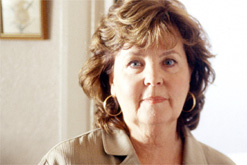
My main characters are Pat, who’s the medium, and Louise, a mum whose teenage son has been stabbed. Pat’s in her 60s by the time most of the action takes place. There are loads of fantastic British actresses who could play her. Maybe Pauline Collins – she has a mixture of warmth and grit that would work really well.

Pat also appears as a teenager. I don’t know who could play the young Pat – I’d probably go for someone new and completely unfamiliar.

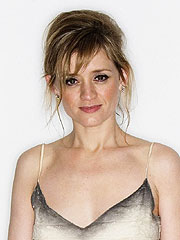
In my imagination Louise just is Anne-Marie Duff, so that’s an easy one.

Q. What is a one sentence synopsis of your book?

It’s about a mother of a murdered son and a woman who says she can talk to the dead.

Q. Will you self-publish or be represented by an agent?

Too soon to say. Ideally traditionally published with an agent. I’ve talked about why I’m not mad keen on self-publishing at the moment here, but never say never.


Q. How long did it take to write the first draft?

I’ll tell you when I’ve written it. For my first novel the first draft took a neat 8 weeks, writing 2000 words a day 5 days a week. This one’s going much much slower, which isn’t necessarily a bad thing. I’m hoping it’ll make for a slightly less crappy first draft than I managed last time.

Q: With which books within your genre would your story compare?

I hope it’s unique, but structurally it definitely owes something to Margaret Attwood – I love inventive narrative structure. There’s also a hint of Kate Morton about it. I do like a bit of a timeslip.

Q: Who or what inspired you to write this book?

I’m not sure. I’m not a great fan of doing x-factor type emotional dedications. I’m not writing it for my dead kitten or wonderous great aunt. I’m writing it because I’m a writer, who wants to be a published writer, so writing books is kind of what I do.

Q: What else about your book might pique the reader’s interest?

Well it’s going to be bloody marvellous  obviously. And there’s a  rock band in it and a deceased Pekingese and a Somme veteran called Stanley (also deceased). What more could you want?

As always, please do commenting and following/subscribing if you feel so led. Bye-bye.

In which I go to the library, and behold its great and wondersome shininess. Aaaaah…

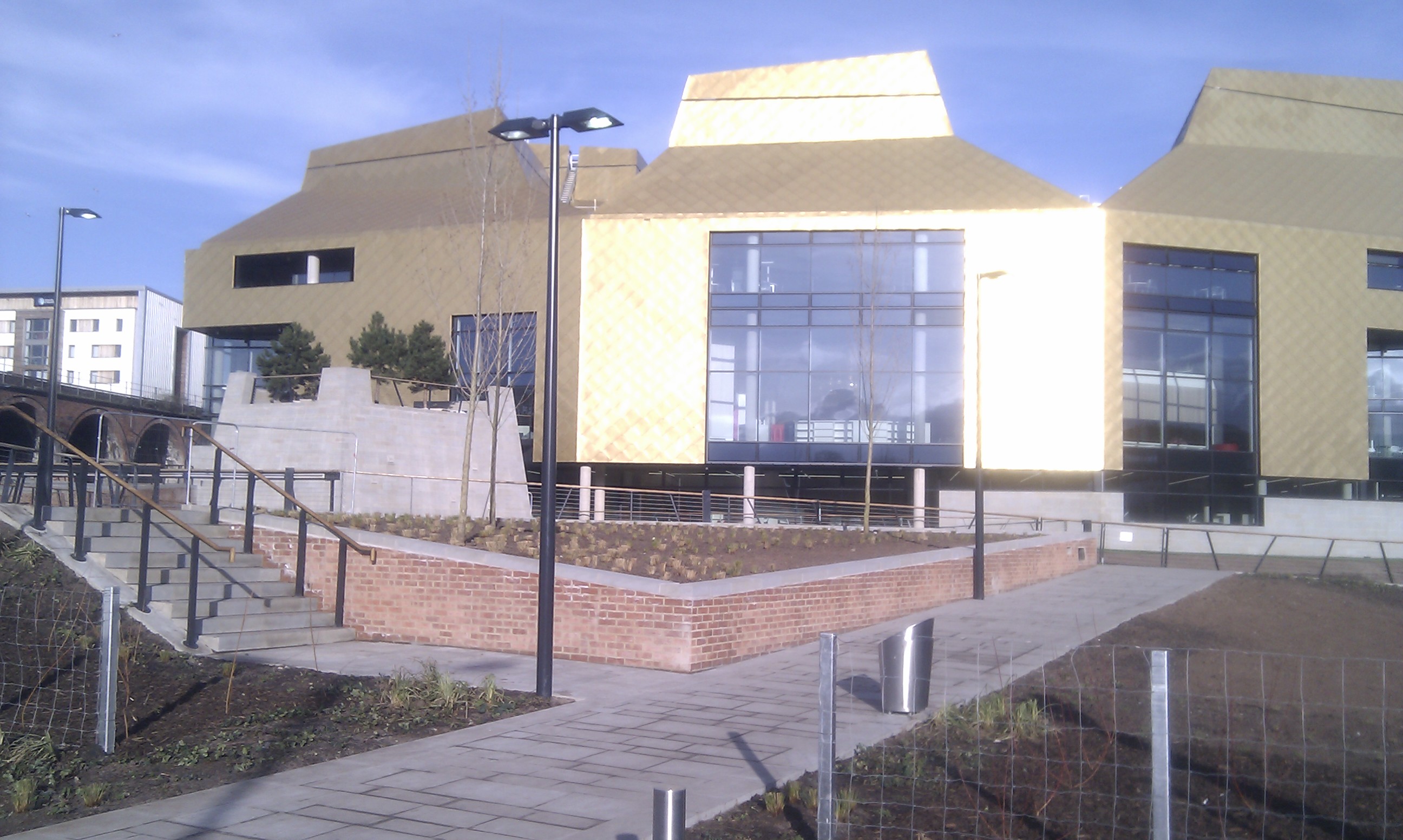
Worcester's shiny shiny library

So the magical city of Worcester (note: not actually magical) has a new library. It is called The Hive, and nobody really knows why. It’s very exciting. The reasons it is exciting are twofold. Firstly, it’s a combined University and City library and therefore is a bit massive and has space for ALL the books. If you’re thinking that no library could really have space for all the books, you’re wrong, and need, urgently to get your Pratchett on and learn about l-space. Secondly, the new library is exciting because it is GOLD! Altogether now….

The goldness is particularly exciting because it means that we have a new building that isn’t a glass box. Now some people aren’t fond of the gold. They think it looks a bit weird. Those people are, of course, entirely correct, but I love it. Weird is always better than bland. It’s why I very much like the Selfridges building at the end of Birmingham’s Bullring too. It’s silvery blue and looks like the shopping centre has a big lovely derriere.

Anyhoo, we were talking about the library. I say it’s new. It opened in July. The Queen came and opened it. Actually it was already open then. Queenie “officially” opened it. She didn’t turn up with a big bunch of keys and the code for the alarm system. She just wandered into a building that was already open and pulled back a little curtain on a plaque which said the building was opened by the Queen, which, I think we’ve clearly established, is technically lies. Thinking about it, it was even more of a lie when it was engraved, because the Queen hadn’t even turned up then. Probably the plaque should read, “possibly opened by the Queen, but maybe not. She might cancel with a nasty head cold. Anything could happen. It’s really too soon to say.” But that would probably need a bigger plaque.

Anyhoo, again, the point is I went to Worcester’s shiny shiny new library, and it’s really rather good. It’s like being back at University with all the books and little corners to sit and read and the many many computers which you can log into with your library card or, if you have one, with your University ID. It makes you feel like, with a bit of ingenuity, you could basically make up your own self-study degree programme, and maintain the pretense of still being 19 without the nasty tuition fees. And, because it’s all new, there are modern red sofas with individual overhead lights right out in the middle of the floor where you can walk by them and think “Oooh, red sofas, nice.” And then, further back in the darker corners, there are plain grey chairs and sofas, because it is still a council building after all, and you can’t go frittering public money on red sofas just willy-nilly.

The whole place is a bit of a gift to lazy procrastinating writers and wannabe eternal students like myself, and visiting it has led to a new plan. Novel no 2, which entered hard drafting mode last week, is, I think, going to be written at the library. On writing days I shall pack myself up a little bag with paper and pens and a bottle of water and leave the house like a proper grown-up with a proper job. I shall walk to the library, find a corner (probably a dark corner with a plain grey chair) and I shall write my words. Then I shall walk home again.

This plan has advantages. Again, they are twofold. Firstly, it adds a short walk into my routine, which, hopefuly, will contribute to the ongoing battle against my expanding writer’s bottom. I was going to type “running battle” there, but if I did running the writer’s bottom probably wouldn’t be a problem. Secondly, it moves me away from the home with all its various aids to procrastination, so I might actually manage to write something. I don’t see how I could possibly be led to procrastinate in the big room with ALL the books. Hmmm…

So in summary: libraries are good; big gold libraries are better; and plaques that say the Queen opened something are not to be taken at face value. That is all. Come back next week, when I’ll probably be talking in more detail about the whole diet/weightloss/writer’s bottom issue. Although I might not. I’ll probably become distracted and talk about something else entirely. As ever, please follow if you like what you read. And please comment if you have an interesting thought. If you’re Worcester-local what do you think of The Hive? If you’re not from these parts, then please just chat about libraries, or Queens, or writing locations, or gold things, or anything really.

In which I think about what I learnt at the RNA conference

This weekend was the annual RNA Conference, an event at which romantic novellists get together, talk about writing, the state of the industry and generally maintain a communal level of fabulousness not normally seen outside of a glitter factory.

There are lots of posts all over the internet about the conference – the main RNA blog will gives you a taster (and more pictures of shoes than most shoe shop websites), but I wanted to share a few specific things that I learnt this year.


1. I must blog more regularly.

The first session on Saturday morning was led by Talli Roland and was all about social media. For most of this session I was quite smug. I tweet. You can’t really move for me on facebook. I blog, and then Talli dropped a reality bomb into my self-satisfied bubble. “You have to blog regularly,” she said.

Ah. Yeah. About that. I have been deeply blog-flakey of late. So my new resolution is this. I will blog every week. Every Monday in fact. It would be really truly lovely to see you here. You could do commenting, and then I would do replying and we would be one big happy blogging, chatting family. 


2. Things feel a little bit more positive than last year.

At last year’s conference the overriding vibe from the publishing types in attendance seemed downbeat. I couldn’t escape the feeling that ebooks, self-publishing and the recession were scaring traditional publishers, but no-one had worked out how to respond. There was a sense that if publishers just carried on as if nothing had changed, the world might go back to normal. It had an air of Neville Chamberlain in 1938 about it. The vibe around submissions was downbeat too. The tone was very much, “Our list is full. You could submit, but we’re not really looking for that type of thing…”

This year things were different. Maybe it was just the different personnel in attendance but the vibe was definitely more positive. Publishers were talking about actively looking to acquire new titles. Chatting to authors who’d had one-to-ones with editors, the numbers being encouraged to submit manuscripts seemed higher. And publishers talked openly in their sessions about self-publishing and why they believe that traditional publishing is a better option. Heads were out of the sand and looking forward. None of which is to suggest that getting published in 2012 is easy, or even significantly easier than in 2011, but, to my ears at least, the tone felt more encouraging to try.


3. Everyone needs a good day every now and then

Trying to get published is hard. Writing a novel is hard (I mean, not like brain surgery hard or training 10 hours a day to be an olympic gymnast hard, but in its own way, still tricky). Editing a novel is hard. Getting an agent is hard. Editing again with someone else’s input is harder. There are points along the road where it’s easy to think that it’s never going to happen. It’s easy to see other writers signing deals and posting pics of their cover art on facebook, and wonder if that’s ever going to be you.

At times like that you need A Good Day. A Good Day might just be a day you get an tweet from someone who likes your blog. It might be a day when you write a really good chapter and read it back and think, yeah, that’s actually ok. It might be a day when someone else tells you you’re writing is ok. Saturday was A Good Day for three reasons.

Firstly, I explained the concept behind my novel to a publisher, who responded that she loved the idea. Now that doesn’t mean she’ll love the novel. She might hate the way I’ve dealt with the idea. She might read the opening chapter and think it’s not funny enough. She might think it’s too funny and the jokes distract from the plot. She might just get something else that’s similiar that she loves ever so slightly more on her desk on the same day. But she loved the idea. That alone is worth a tiny happy dance.

Secondly, I won the Elizabeth Goudge Award. This prize is awarded for the RNA’s own story competition which is open to any members attending the conference. This year I won. I have a little trophy, which at some point in the next 12 months, will be engraved with my name. I’ll be alongside some fab writers. That’s worth quite a big happy dance.

Thirdly, in slightly drunken conversation with a gaggle of published writers, someone acknowledged that one of the most frustrating stages in the journey towards publication is the bit where people are reading your work and saying “I really like it, but…” That, they agreed, was the stage just before, “I really like it, and…” Maybe, for me, the “I really like it, but…” stage will last for years and years and several more “not quite there yet” novels, but the next stage, the “I really like it, and…”, doesn’t feel so completely unachieveable. It’s still an IF rather than a WHEN, but it’s a doable IF. Altogether now, Massive Happy Dance!


So that’s just three of the things I learnt. There were lots of others. “Celebrate often” was a big message from Miranda Dickinson’s talk, which I seem to have taken on board particularly well. Just look at all those happy dances. In summary, conference was brilliant. The RNA is brilliant. And you’re all brilliant too, so if you fancy joining me here every Monday for super regular blogging, please follow or subscribe. It’ll give me yet another cause for happy dancing.

In which I offer musings on what it means to “finish” writing a book

My first ever attempt at writing a novel is nearing completion. And let me be clear, by “completion” I don’t actually mean “completion” in the sense that any sane and normal person would understand it.

The non-writers amongst you will probably be open to two potential definitions of when a book is complete. It could be when the writer has typed their way all the way from “Once upon a time…” to “happily ever after” and stepped away from the keyboard. It could also be when the book gets handed over to a publisher and winds up in actual bookshops. Well, I’m not at either of those stages. The first passed some months (years?) ago, and the second may never happen at all.

So what have I been messing about at for the last two years, since I completed my first draft of this novel? Well, various things. There have been periods of having to leave the house and earn some actual money. Although he is astonishingly supportive of my whole penniless writer thing, much beloved husband does also remain fond of more mundane stuff, like eating and paying the mortgage.

There have also been periods of watching my life inexorably ebb away through the medium of my twitter and facebook news feeds. There has been a brain-mushing amount of watching old episodes of Project Runway and America’s Next Top Model on youtube, and falling ever so slightly in love with both Heidi and Tyra. Turns out my ideal woman is a German version of Tyra Banks. Who knew?

There have been periods of sitting staring at my novel-in-progress on the screen and rocking gently before flicking back over to youtube where it’s safe. But mainly there has been editing and rewriting and editing again, because starting at “Once upon a time..” and typing through to “happily ever after” doesn’t get you a book. It gets you a draft, and within that draft there will be plot holes that you could drive a truck through. I mean, YOU could drive a truck through them. I couldn’t obviously. I have driving-terror. The draft will also include characters who change their personality for no reason partway through, and, in my case, one character who changed their name for no reason partway through. That first draft was like a route map for the whole – it was only after I’d written it, that I could really start navigating through the novel.

There have been periods of very bravely allowing other people to read bits of my work for feedback, occasionally leading to periods of weeping and periods of defensiveness (usually followed by a much longer period of acceptance). Feedback on work in progress is interesting. The main thing I’ve learnt is that it’s wise to be careful who you ask. The best writers aren’t always the best critiquers. Twitter and facebook are brilliant for chatting to other writers, but the best feedback can come from intelligent readers outside of the little “writer bubble” we sometimes occupy. (Although I have had top feedback from some v talented writers – Huzzah for Holly Magill,  Lisa Bodenham-Mason and the RNA New Writers Scheme.)

I am now very nearly done with the editing and rewriting. I’ve (I think) beaten my insubordinate opening chapter into submission. There’s one more chapter to rewrite and then a few bits and bobs of line edits and then, and then… Well, and then, it’s time to send baby out into the world. I’ve made my list of potential agents, and prioritised within that list. I’ve identified publishers who accept unagented submissions. It’s pretty much all over bar the posting.

And after that, I start back at “Once upon a time…” and do it all over again, with a whole new set of problems and anxieties trying to get in the way. I “finished” one novel, but was it a fluke? Can I do it again? The rejections for novel no. 1 will be flowing by then too, trying to distract me with their depressing hints at my inate lack of ability. And that’s not even the worst thing – the worst thing is that I’ve now watched ALL the episodes of Top Model on youtube, even Canada’s Next Top Model. Can I write at all without a Top Model based word count incentive? I’ll let you know…

Where I talk about why I won’t be self-publishing soon (which is not the same as ever)

This week I’ve been thinking a lot about self-publishing. The ability of Amazon to capture books in their magic butterfly nets and trap the words inside their lovely Kindles means that writers have a realistic alternative to wading through the months of submission and rejection (a process which, almost invariably, ends up with them having nothing published, but having contributed considerably to the coffers of the nice people at Rymans who sell the Big Envelopes). More and more writers are thinking why bother? And there are good reasons for feeling that way. The perception is that mainstream publishing is getting increasingly risk-averse. Publishers are prepared to spend money on books by posh girls with famous sisters and even more famous bottoms, but not so happy to risk an outlay on a new novel by an untried writer.

If your book doesn’t fit easily into a neat marketing box, there’s even more encouragement to go it alone. Across web forums, writer’s conferences and writing courses, new writers are repeatedly told that they must be able to describe their book in a single sentence. To attract the capricious attentions of a mainstream publisher you have to have that instant-appeal marketing hook.

I’ve also been told, by an editor for a major publisher, that she expects writers to be able to explain what genre their book fits into and where it would sit in the market. That is just one person’s view, but a person who should know of what she speaks. So, if you’re writing a sort-of literary rom-com based on Shakespeare but with added maths, for example, you might decide that it’s easier to sell your novel directly to readers than to jump through that particular hoop. It’s a problem a lot of writers face – two others describe their own responses to this particular publishing headache here and here.

The economics of self-publishing, at least in e-book form, are also looking increasingly enticing for writers. Advances from publishers for new writers tend towards the modest. Publishing directly to Kindle through Amazon gives you a much bigger share of the cover price. In principle, it’s perfectly possible to make more income from e-publishing a book independently and selling fewer copies at a lower price, than if you published through a traditional publisher.

Despite having made a stunningly convincing arguement in favour of self-publishing, I still don’t wanna. In traditional “Alison does like a numbered list” style, here’s why:

1. It’s possible to make better money, but possible is not the same as easy.

I’m a totally unknown writer, and I’d be publishing without any marketing support behind me. Now there’s stuff I could do to promote a book at very little cost. I can tweet. I can blog. I can bully close personal friends into buying it. I reckon that between this blog, Facebook, Twitter and good old-fashioned real-life (you know where your parents and the old people live), I can put information out directly to somewhere in the region of 1000 people. Now, they won’t all buy the book. 1% of those people buying it would be 10 people. 10%, which is probably ambitious, would be 100 sales. That’s charming, but several orders of magnitude below what you need to get a book to the tipping point where word of mouth sends it on its way.

So I’d try other stuff: getting reviews from friendly blogs, encouraging Amazon reviews, making myself a proper glossy website, making myself a lovely shiny Amazon author page, trying to get some local press coverage – realistically I’d have to do a lot of that if I had an agent and mainstream publisher too, but I wouldn’t be doing it entirely on my own. And, at the risk of sounding overly focussed on the money, I’d be doing it while eating marmitey-toast paid for out of my advance.

2. There’s no such thing as a free-to-publish (and good and successful) book

So marketing is one problem. What about the actual novel itself? I could write the book, edit the book, draw myself a lovely little cover in Paint, and stick it up on Amazon. The problem there is that what I’d have published probably wouldn’t be a very good book.

To get a book  to publishable quality involves a bit of cost. I’d definitely want a professional cover design. I’d probably want the book professionally edited. That’s expensive. Even non-commercial critiquing services (like the RNA‘s fabulous New Writer’s Scheme of which I’m a very proud member) aren’t free. To self-publish a properly finished, professional-looking book, even as an e-book only venture, involves some investment, and, unless my numbers come up (which would involve me buying a lottery ticket, which I don’t because I, y’know, have a basic understanding of probability) I’m not really in a position to fork out that money.

3. Good enough isn’t good enough (for me)

Without the costs described above, particularly professional editing, would I be confident that my novel was good enough to put out there? Writers develop – I definitely hope to be a better writer in the future than I am now. The book I’d be e-publishing at the moment is my first completed novel. That inevitably means that I’ll look back on it in the future and see lots of things that could be improved, but I don’t want to look back and wish it had never been published. It might be a novel that I’d be proud of on the day I sent it out into the world, but would I still be proud in two or three years time?

Part of this is about my personality. I’m a perfectionist. I have high standards – that’s part of the reason that I’m good in my regular money-earning job as a trainer. I have high expectations of students, and generally find that if you set a bar just above what people think they are capable of, they will exceed their own expectations to achieve it. It also means I set high standards for my own work, and I do still see acceptance by a traditional publisher as a validation that I’ve achieved a particular standard. It’s would be a massive shiny gold star on the star chart inside my head. Perhaps the fact that that’s important to me is a weakness. Perhaps it’s just a view that’s getting out of date, but in my gut, it’s still how I feel.

So that’s why I won’t be self-publishing my first novel, and am, instead, about to embark on the long tortuous journey to repeated rejection. I applaud, wholeheartedly, all those people who are braver than I, and are going it alone, and I’d love to get your comments on the self-publishing quandary. I’d also love to hear from anyone who’s decided against, and from anyone else who thinks anything at all really about things. Comment away! And why not subscribe or follow the blog while you’re here? Good-o.

In which I look forward to the shiny new year

So this is 2012. It seems perfectly resonable so far, although it was trailed as a bumper exciting year, what with Olympics and Diamond Jubilees and The End of The World. Compared with the spoilers the opening week could be seen as just a tiny bit dull.

To brighten up the boredom, it is traditional, at this point in the calendar, to take stock of one’s life and make resolutions for its improvement. Now, lots of people don’t hold with resolutions. They point out that you always end up breaking them by about mid-January and then you get downhearted and end up doing worse that you were before you made the resolution. These people think they are being mature and sensible, when actually, they are fools. They are allowing their experience to override their hope. Hope should always be allowed to win in these little internal debates. Hopeful people may be disappointed more often, but I suspect they are still happier overall, and they’re definitely more fun to be around.

So, supressing my inner Eeyore, I have made three resolutions for 2012.

1.  Get fit. Get thin.

I’ll not bore you with this one. If you’ve read the blog before you’ll have heard all about it here. If you’ve not read that already then just click back there, where it said here and away you go.

Being fit is good. Not having a heart attack when you’re 40 is good. Not having to buy a whole new wardrobe every year because you’ve gone up another dress size is good. Being able to walk up small hills without turning blue and making death noises is good. For all these reasons and more I’m very focussed on losing weight this year.

My aim is to get down to somewhere below 10.5 stone by summer, and (and this bit’s important) still be the same weight by the end of the year. I’ve managed the losing weight bit before. The big challenge this year is staying at a healthy weight once I’m there, but it needs to be done, and so it shall.

2. Get some writing (apart from this lovely blog) out there into the world

There are two parts to being a writer pursuing publication. There’s the writing, and then there’s the pursuing publication. Sadly, the two activities don’t really require the same skills. One is all about sitting in a lonely garret and trying to type more words into Word than onto Twitter. The other is about venturing out into Big World and thrusting your precious manuscript into the hands of agents, publishers, publisher’s cleaning ladies, agent’s manicurists, and any other poor sod who gets in your way. That part of the deal is all about covering letters, having a killer synopsis, networking and the truly horrendous sounding Elevator Pitch.

This year I’m going to be getting my increasingly svelte derriere into gear on both fronts. The novel-in-progress which has already been in progress for far too long will get it’s final spit and polish and will be winging it’s way out to be rejected by Easter. My second novel will also be completed and out there landing on slush piles by the end of the year. And finally, I’ll have written a first draft of number three before it’s time to get all Auld Lang Syney at each other again. Oh yes I will.

3. I’m going to learn to drive.

“Hang on!” Some of you are probably shouting (those of you who know me in the Real World TM and are also odd enough to shout at your computers without shame), “You can already drive.”

And the weird shouting people are correct. I passed my driving test in 2008, at a very respectable second attempt. Admittedly the first attempt wasn’t that respectable and did involve a certain amount of trying to pull away in 3rd gear, but no-one normal passes their driving test first time, so that’s all good.

Unfortunately, since then very little actual driving has occured, to the point where I now don’t think I’ve driven for over a year. This is largely to do with the driving terror. I properly detest driving to the point of almost being phobic about it. I get genuinely scared at the idea. If I think I might have to drive the next day I won’t sleep the night before. Add that fear to a lifestyle where I live within walking distance of a city centre, do most of my paid work in central Birmingham where it’s much easier to get the train, even if you like driving, and you end up with a girl who has never got over the initial driving nerves.  

This is silly. I know that I’m a perfectly reasonable driver. A little inexperienced, but still less scary that lots of other people who hop in their motorised vehicles without hesitation. So this year, I am going to get over the driving fear, even if that does involve going back to the driving lesson stage with all the irritation and expense that entails.

This, I suspect, is the resolution I’m most likely to break. The first two are things I desperately want to achieve. This is one I’d quite like to achieve, but mainly is something I think I ought to do. And I can be a pig-headed little madam – being told I ought to do something (even by myself) rarely works as a motivator. Nonethless, I will try.

So those are my resolutions. They probably should include something about increasing my amount of paid work, but I’m responding to the low levels of freelance work out there on the horizon by making a happy face and hoping something turns up. (Anyone looking for a adult trainer in the Midlands area and/or online, please do get in touch though… I can train on advice skills, managing volunteers, welfare benefits, employment law, social media, training skills…)

Any thoughts on my aims for the year? Any resolutions of your own you’d like to share? For example, you might want to resolve to stay up to date with lovely Alison’s lovely blog by following or subscribing. I think that would be a very good resolution indeed.