In which I learn some things and wear pretty pretty shoes

Two blog posts in two days! It’s all go here. I’m aiming to post again tomorrow in a more normal random thoughts and rantings sort of way, so that would be three in three days! Don’t hold your breath though peoples – I think we all know that probably ain’t gonna happen.

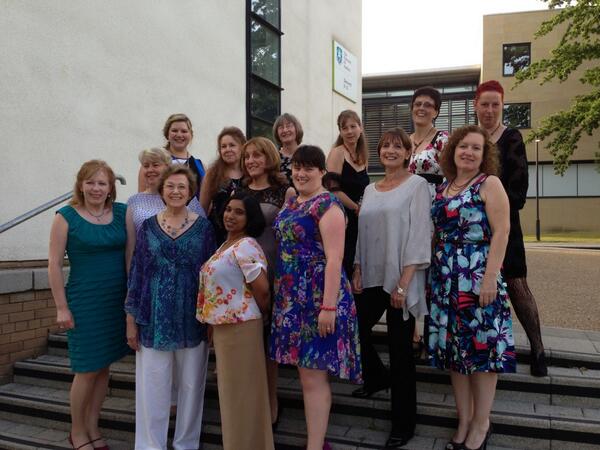
Anyway, this weekend I have been at the Romantic Novelists’ Association Conference. It was my 3rd RNA Conference and I’m feeling like a bit of an old hand now. This year was particularly exciting as I was able to announce my first publishing contract which was signed just 2 days before the conference! What? You haven’t heard about that? Seems unlikely given that basically haven’t shut up about it since Friday, but just in case, all the details are in yesterday‘s blog, and I’ll gratuitously share another Choc Lit Authors pic (with me in it!) for you right here:

Choc Lit Authors

So what did I learn at conference this year? There were things, and they were threefold.

1. A nice spider graph about your major theme can help in the planning of your novel

In creative terms, the top workshop of the weekend for me was Julie Cohen’s session on Theme. I’ve been on courses with Julie before. She’s a super good writer and a brilliant teacher. If you’re interesting in novel writing I heartily recommend that you book yourself on one of her courses. I think the details on her website are for this year, but watch that space for future stuff.

Anyway, during Julie’s conference session I surprised myself by knowing very quickly what the core theme for the novel I’m about to start writing is going to be. I can also see ways in which that theme will impact on the characterisation and the interaction between different characters. Realising I’ve already got a lot of that stuff in my brain, and getting some pointers on how those instincts might translate into actual character and plot development, was invaluable given that I’m currently suffering from what is commonly known as Total Paralysing Second Novel terror.

I’ve just contracted with a publisher for my first novel, but what if that was a fluke? What if I can’t do it again? What if there is no second book in my brain? What if there is but I can’t work out how to write it? What if I work out how to write it and it’s just a bit pants? This session didn’t make those nerves go away but it did start to make me think maybe I am just beginning to sort of slightly know a little bit what I’m doing here.

2. I must not procrastinate.

Nina Harrington led a fantastic session on procrastination, specifically on how to avoid procrastination. She talked about how fear can stop us from getting on and doing things by making tasks seem overwhelming. Those of you who reached this paragraph via the traditional route of the previous paragraph will understand that that felt pretty relevant for me at the moment.

She also gave some great ideas for breaking work down into achievable chunks and carving out your precious writing time. Combined with talks from Linda Hooper on time management and Sonia Duggan on writing through your fear, I’ve come away from conference fired up and ready to get stuck into edits and rewrites and cracking on with that difficult second novel. I’ve even written myself a little daily schedule to show where all the writing and editing fits into the day. Hurrah.

3. And finally, these shoes are art. They should not be worn as actual footwear.

So very pretty but so very hurty
So very pretty but so very very hurty.

And that is all. According to my lovely shiny new schedule, I’m supposed to be doing some rewrites right now, so I shall be gone from this place. Bye bye.
In which I clear my throat and offer an announcement

Ahem.

That was the throat clearing. Here’s the announcement.

I am absolutely beyond delighted to announce that I have signed a contract with Choc Lit Lite to publish my first novel. I’m ecstatic to have signed with Choc Lit – they’re a really forward-looking exciting publisher, with a really good reputation for working with their authors and developing new talent. Waaaaaaah!

Obviously I’m a teensy bit excited about becoming a published author, but at the moment the whole thing feels utterly unreal. Fortunately I’ve just spent the weekend at the Romantic Novelists’ Association conference where there were lots of other published Choc Lit authors I was able to poke to check that they were really really real. After they’d got over the poking we even took a big group photo.

In which I appear to be a giant
(taken by Lizzie Lamb)

We don’t seem to have all managed to look at the same camera in this one, and I do appear to be quite huge – there’s a learning point there about not standing at the front when having your photo taken with thin people – but nonetheless it’s a Choc Lit Authors picture and I’m in it! Huzzah!

At this point I do need to thank just a couple of people. You have three choices about how to read this next bit. You can: a) take a very deep breath and just rattle through it as quickly as possible; b) do the full-Gwyneth and read the whole thing aloud with appropriate sobbing; c) scan quickly for your own name and ignore the rest. If your name isn’t there, it’s because I’m stupid and I’ve messed up and missed you out – unless I’ve never met, emailed, tweeted, written, phoned, texted or spoken to you in my life, in which case, seriously, what were you expecting?

So, in no particular order, thank-you to all of the following who have helped, supported, not ridiculed my attempts to do writing…

Deborah Catesby, Dawn Hudd, Holly Magill, Candi Miller, Tamara Bolger, Anne Milton, Lisa Bodenham, Kate Johnson, Julie Cohen, everyone who I’ve been on one of Julie Cohen’s lovely writing courses with, everyone I’ve ever taught on a creative writing course, the entirety of the RNA but particularly Melanie Hilton and the NWS readers, Helen Harron, my mum and dad (if you’re reading this in Gwyneth style you probably need to weep a bit here), the Choc Lit Tasting Panel, everyone else at Choc Lit, Tim Butler, Tony Judge, Dunstan Power, Clive Eardley, Taliah Drayak, Polly Robinson, all the RNA Conference speakers for the last 3 years (every last one of them), Katie Fforde, Greg Mosse, Kate Hill, Deema Davidson, Rich Badley, Eva Cubero, Isabel Phillips, all the lovely writers and readers on Twitter, the RNA Birmingham Chapter, everyone who has let me play at being a writer on their blog – a big hand for Nikki Goodman and the Write Romantics, everyone I’ve got pished near in an RNA kitchen – I’m looking at you Immi Howson, Jane Lovering, Ruth Long, Jules Wake, Talli Roland, Sarah Callejo, Jane Tranter, Denise Deegan, Colette Caddle, Brigid Coady and others too numerous and fabulous to list – and finally EngineerBoy for his most excellent services to engineering and mortgage paying, while I work the whole penniless writer vibe. Thank you all. Some of you will know how you helped. Some of you won’t ever read this or even know who I am, but thank you all the same.

Right. Gushing over. Time to get bum on seat, fingers on keyboard and actually do this writing lark for real. I’ll be back to the blog tomorrow to tell you all about what happened at the RNA Conference this year. Be warned – it will almost certainly involve pictures of shoes.

In which I think about settling down with a good book

Ahoy there and apologies for blogging tardiness. Unfortunately people keep luring me away from my nice safe sofa-laptop bubble by trying to give me money to teach people stuff, which is tiresome, but does lead to having money to buy things, which is nice.

Anyhow, you find me, dear readerist, in a time of great trauma, because, right at the moment, I don’t really have a book on the go.

Now some of you probably won’t appreciate why that’s traumatic. Some of you will be the sorts of people who dip in and out of a book as the mood takes them, and have no more emotional attachment to the idea of reading that they would to a passable movie or the end of a series of Grand Designs (although, I’m not sure series of Grand Designs ever actually end, they just morph without warning into repeats of older episodes). Anyhow, we are a very egalitarian and open-minded blog here. We welcome all sorts of people, regardless of race, gender or preference in flavour of fruit pastel. So you people who aren’t fully fledged Book Types are welcome along with everyone else. I do, however, reserve the right to give you very slightly suspicious glances from time to time, and pop a plastic cover down before I let you sit on the good chairs.

Part of the reason I am without book at the present time, is that I am in the midst of working through the plot for a new novel idea. When I’m deep in a first draft or in working through initial plot ideas, I quite often find that my reading tails off a bit. It’s as if my brain can only be fully immersed in one story at a time. For the same reason, I think, I only ever have one book on the go at any given moment. Some people can deal with more than one. EngineerBoy often has an “upstairs” and a “downstairs” book in progress at the same time. This causes me to peer at him suspiciously quite a lot, and occasionally look at bungalows on estate agency websites as a last resort to break him out of this bizarre and worrying habit.

Right now though, I need a book to read. I’m starting to get a bit twitchy for lack of book. It needs to be absorbing enough for me to get into easily but not so mentally taxing that it interferes with writer brain doing its important story development, and also not so light and frothy that I my brain isn’t engaged at all. It can be fiction or non-fiction. It might even be something that’s already on my not-as-big-as-it-sometimes-is To Read pile, all of which look interesting, but none of which are screaming “Read me now!” in a sufficiently loud voice.

to read pile

So please help me out with suggestions. What books have you properly loved recently and why? And, any writers out there, can you read and write alongside one another or are they just mutually exclusive activities?

In which I have some unexpected free time

A shortish blog post this week, and a slightly early blog post, for reasons which shall become apparent forthwith.

I find myself in the midst of 4 days of unexpected free time. Originally I was supposed to be working 2 days this week and then I had 2 days set aside for a v minor unexciting little hospital procedure with a day to lie on the sofa looking wan while claiming that EngineerBoy needed to be at my beck and call during the period of convalescence. Both days of work were cancelled by the organisation I was working for, and then the hospital trip was cancelled due to a bout of horrid pooey vomity bug over the weekend. They really don’t like the sick people bothering them, don’t hospitals.

So 4 whole days of unexpected unscheduled free time. What shall I do with it? Well, what I shall do with it is just write. I was tempted to use an expletive between the just and the write there for emphasis, but my mother reads this blog so I shall spurn such language. (Hello Mum! *waves*)

I have 18ooo words of an abandoned romance story on my hard drive. I don’t like the 18000 words I’ve already done – they’re too serious and overtly “romance” and just not really very me at all. However, of late, a few publishers, like Choc Lit for example, have started accepting submissions of shorter romantic comedies for digital only publication. So the plan is this – 4 days, 18000 words to rewrite, c.15000 words to write afresh, and that’s a full first draft. Sorted.

Now I’m unlikely to actually achieve that many words in 4 days, but sometimes better to aim high and marginally fail than aim low and achieve. Every TV programme I could plausibly fancy watching has been set to record. I’m entirely prepared to subsist on toast and bananas (a state which isn’t that unusual actually), and so here I go. 4 days. 1 novella. See you all on the other side.

In which I consider the virtue of patience

Patience, they say, is a virtue. If that’s true then wannabe writers are, without question, shining beacons of good morals, because waiting is one of our main activities.

I was at a day-job meeting earlier this week, where I found myself sat next to one of those people you see at meetings. You know the people – the ones you only know from the fact that they turn up at all the same meetings as you and you see their email address a lot on contacts lists. Being a fundamentally genial fellow, this person enquired after my well being, and then, demonstrating quite marvellous social skills, remembered that I Do Writing, and asked how that was going. “Oh well,” said I. “I’ve got my first novel out with a publisher waiting for a response at the moment, and I’m working on the second.”

“Oh,” he said, failing to mask the slight air of disappointment in his tone. “That’s what you said last time I saw you.”

Well, yeah. It is. And the last time I saw him, I reckon was November. Sometimes that’s just how long these things take – any writers out there feel free to share your “longest wait for a response” anecdotes in the comments! Patience, as I already mentioned, is a virtue.

Unfortunately, for this particular wannabe writer it’s not a virtue that comes naturally. I am a deeply impatient soul. For example, I restarted my ongoing (and largely good-intention based) diet on Monday, and have stuck to it for 2 whole days. I am, therefore, utterly dismayed at the fact that I am still Not Thin. It’s really getting quite frustrating now. It’s almost as if I’m going to have to stick with the diet for weeks and weeks and weeks (or more probably months and months and months).

Dieting aside, impatience has generally served me pretty well. It’s given me a healthy intolerance of situations that make me unhappy, which led me to go back to university to study creative writing and, later, led to me quitting proper work altogether to go freelance and Do Writing. Both excellent (if somewhat flakey) life decisions, which wouldn’t have been made if I’d adopted a “wait and see” attitude.

So, in conclusion, patience is a virtue, but so, on occasion, is impatience. And don’t ask wannabe writers how it’s going more than once a year. The answer will almost certainly be, “Slowly.”

In which I think about ChipLitFest and this very blog

So, lovely blog readists, I have had a delightful weekend. Simply delightful. The sun was out. The cake was chocolately. The wine was pink and sparkling, and there was a literary festival to attend. Really, what more could a prematurely middle-aged and unapologetically middle-class girl ask for?

Saturday was spent at Chipping Norton Literary Festival, stroking lovely books and eating excellent cake. We even managed to squeeze in a couple of talks. Both were aimed at writers, one discussing why writers still need agents, even given the self-publishing boom, and the other looking at social media for writers.

To be 100% honest it was really the agent talk that I was most interested in. The Social Media session was something I’d booked because it fit in well with the other things we were doing and I thought it might be mildly time-passingly interesting, but actually, that was the session that provided the most food for thought. Liz Fenwick, who led the session, is a fellow RNA member and a published novelist. She talked, interestingly and with great humour, about a whole host of social media platforms – twitter, facebook, pinterest, goodreads etc.

She also talked about blogs, and what we, as writers, should and (perhaps) shouldn’t talk about on our blogs, tweets and facebook pages. She suggested, quite rightly I suspect, that talking about religion and politics risks alienating at least some potential readers. Now, as the observant amongst you may have noticed, I do, on occasion, get a tiny bit political on this blog. I, it has to be acknowledged, Have Views. Now I try to ensure that those views are reasonably measured and researched, but I’m not entirely above having a little rant about Michael Gove either.

Now lots of you won’t find that off-putting at all, and I, of course, think all the views expressed here are entirely normal and  rational and right-thinking. So how could anyone find them off-putting? But then, if I found a writer who regularly blogged very right wing or reactionary material, I would probably find that somewhat tiresome myself. Generally, we are all much less prone to consider a person ranty and over-the-top if we tend to agree with what they’re saying.

So I guess the question is, what is the point of this blog? Is it just a place for me to write what I like in the hope that you might be interested, or should I be viewing it more definitely as part of my writerly brand? When I started the blog I said it would “be filled with whatever thoughts pop into my brain. My only commitment to you is that I will endeavour, whereever possible, to think only interesting thoughts.” The idea was that this would be a little corner of the internet where I could write things about stuff that seemed interesting or worth mentioning and that possibly there would be people (I was thinking anywhere up to about eight of you) who would find some of those things interesting too.

But I also want to be a published novelist. I have a full novel manuscript out under consideration with a publisher as I type. When that publisher (or any other in the future) googles me I want them to find someone who doesn’t look like a potential liability. So do I need to put a pin in the bigger rantier opinions and create a blogland more in keeping with the wannabe professional writer image I’m trying to project? Or is a bit of opinion welcome? Would losing it make for a duller blog or is it better when I don’t rant anyway? I have no conclusion today, so please, tell me what you think…

In which I am writerly for the 2nd week in a row

Well, you can wait for months for a writing-related blog post around here, and then two come along at once. So after getting all researchy for my novel in progress last week (thanks to everyone who offered their own memories of being a 1960s teenager in the comments), today I’m thinking about writing shorter stuff.

I used, way back in the mists of time when I was fresh-faced young creative writing student, to write quite a lot of shorter pieces. I dabbled with both poetry and short stories, with fairly limited success. When I decided, back in 2009, that I wanted to Do Novels, I pretty much stopped writing short things. More recently I’ve started again, mainly with short stories – I am so definitely not a poet –  and I’m trying to work out the best approach.

There are gazillions of places that writers can submit or showcase short stories and poetry. There are big competitions, little competitions, print magazines (although sections of that market are shrinking rapidly), e-zines, writing blogs and spoken word events. So what’s the best line of attack? Should one just write stuff that you think is good and interesting and then look for a outlet for the piece? Or is it best to target specific competitions or publications?

One story that I did have success with, winning a lovely shiny little cup, was written specifically for that competition, but that was a competition with a specified theme. Others are more open, so perhaps have less requirement for the writer to write something specifically for that competition.

Another big potential outlet for short pieces of writing is Spoken Word events. These seem to have got more and more popular over the last couple of years, to the point where I, at least, can barely leave the house without someone shouting their poetic offering at me. I find spoken word events tricky though. For me, there’s a big difference between a piece of writing that works well for an individual reading it off the page, and a piece that works as a verbal performance.

Attending Spoken Word evenings I’ve sat through plenty of pieces that might have been just fine to read quietly to oneself, but which all but died on their author’s poor tired feet in performance. So, for me, Spoken Word events are something that, if I choose to do them, I have to write something particular for.

So, how best to target one’s writing resources? Is it better to keep one’s eyes on a single goal – for me that would be novel writing – and exclusively focus on that? Or is it better to pick out and target specific short story competitions to build experience and profile (and if you’re lucky get some prize money)? Or should writing be a purely creative endeavour where we write what we love and look for somewhere to submit/publish it later? What do you think world?

In which I think about research and try to get better at talking about the book

I am now 18000 words into novel number 2. This is particularly exciting because about half of those words have been bashed out in the last ten days or so, marking an stratospheric increase in the pace of progress. It also means that I’m having to get my head around the new challenges of book 2, as compared to book 1.

Book 1 was set between 2002 and 2013, and occurred entirely in places where I have actually lived. There was a tiny bit of research involved in making one character, a mathematician, sound like he knew what he was talking about, but that came down to getting a couple of books from the library and reading them. Not too onerous, even for a naturally workshy animal like myself.

With book 2, however, I’ve set a whole section of the story in 1967. Now 1967 isn’t like 1867 or 1267. We’re not into massively unrecognisable “past is another country” territory, but we are ten years before I was born. I’ve shifted into writing about stuff that I don’t remember, and I didn’t live through.

Even though it’s only 46 years in the past, there’s a surprising amount that I don’t know. I need to find out about homes for unmarried mothers, and the Abortion Act, both of which require in-depth research. But it’s not just the big things that form stumbling blocks. In many ways it’s the smaller details that are trickier to make authentic. What did 17 year olds who wanted to look cool drink in 1967? Has the legal driving age changed since the 1960s? What did a pharmacist’s shop look like in a provincial town in 1967?

I’ve tried to make it a little bit easier for myself by setting this part of the story in a place I know really well – the town where I grew up. That’s tricky, in its own way, too. I have to keep checking when certain buildings were built, when they started being used for a particular function, whether it was possible to walk directly from a to b via that route in 1967, as it was in 1987 when I was growing up. Now you might say that that doesn’t matter, that you can fiddle with those details in the name of fiction. And I would say you were right, but, as the writer, I feel like I need to know which details I’m altering and which are absolutely right.

So be warned, any of you who were bright young things in the mid-late 1960s, expect to get badgered with lots of inane questions about your youth when next we meet. And please accept my apologies in advance for how completely annoying that is likely to become.

The other writing challenge I’m working on at the moment, is trying to get better at talking about my work. Writing a novel is such an unbelievably solitary experience. You find yourself living in your own head with only made-up people for company for big hunks of time. Those made up people are often delicate, and prone to damage if brought out and exposed to critical gaze too early or too often. (More thoughts on that quandary here.)

And when you’ve written the thing you have to go out and try to sell it. You have to be able to explain what it’s about in as few, and as interesting, words as is possible. You also have to be able to talk to friends at dinner parties, and in bars, without running back to your husband and hiding when they ask about your writing. Not that I do that. At all. Ever. Very often.

I do find the ‘talking about it’ part of writing incredibly difficult though, simply because you spend so long writing and creating a world, that then discussing it with other people feels like stepping out of the writing bubble into a dark and jagged place where people might tell you that it sounds crap. And that is a wee bit scary. So I’m going to try to offer you a very occasional blog about what I’m writing as a sort of gateway process into actually talking about it to real physical human people. This was the first one. I hope you enjoyed.

In which I acknowledge being a bad blogger and offer a small festive story in way of apology

I have been a bad blogger of late. I have failed to offer you Monday thoughts on the Chancellor’s Autumn Statement, David Cameron’s reaction to the Leveson Report, the freakishly rapidly decreasing size of Curly-Wurlys, or the upcoming festive season. And I have thoughts on all these things. Oh yes, indeedy, I have thoughts.

Alas, of late time has been short, and life has been busy so these many and fascinating thoughts have remained unblogged. Please accept my humblest apologies and this short festive storyette in recompense. Normal thought-sharing service shall be resumed in January. Promise.


The Shepherd

“So Bob,” Miss Pennydew shuffles slightly in her seat. “I think you know why we’ve asked you here today.”

“Aye.”

“It’s…” She coughs. “It’s about last Monday. We’ve.. em… we’ve talked to young Sam, but I just wanted to give you the opportunity to take us through your version of events, just as you see it, from your point of view.”

“Aye.”

Miss Pennydew pauses. “Just in your own words…”

“Aye.”

“Whenever you’re ready.” She waits for Bob to fill the silence. The silence extends. “Ok. Well, what if I run through Sam’s account and you can just jump in whenever you think?”

“Reet.”

“So Sam told us, with regard to the incident in question, that he initially noticed an unusually bright star.”

“Aye.”

“And then…?” She tails off. “Ok. And then Sam says…” She consults her notes. “He says that you were surrounded by a heavenly throng.”

Bob nods, apparently feeling that he’s said quite enough already.

“After which one of the…” She makes quotation mark fingers. “…’throng’ addressed you telling you not to fear.”

“Aye.”

“Sam said that this was because a…” She does the fingers again. “…’mighty dread’ had seized your troubled minds.”

Bob pulls a face, suggestive, he hopes, of the notion that Sam might do better with a bit less book-learning and a bit more watching of the flock by night.

“After which, and you’ll understand our concern here, it appears that both yourself and Sam, left the flock and went into town with the intention of visiting a newborn baby, apparently located in a stable.”

“Aye.”

“Just to be clear…” She smiles, the sort of smile that hints at men in white coats and the idea that Bob might like to take a little bit of time off quite soon. “..You didn’t know the family with the baby? They weren’t relatives or close friends?”

“No.”

“You, and Sam, simply decided to leave the sheep, and visit a baby because you were told to by a ‘heavenly throng’.”

“Aye.”

“And, still just so I’m clear – no one’s in trouble here – you hadn’t been erm… drinking at all prior to leaving the flock.”

Bob shakes his head.

“Ok. Not that I’m accusing anyone. I’m sure a little drink every now and then to keep the cold out won’t do any harm, especially at Christmas.”

She pauses and re-runs the sentence in her head. Bob crinkles his brow.

“Anyhow, you do understand our concern, I’m sure. Given that your current role is very much sheep-focussed, any time spent outside of immediate shepherding arena, should really be booked in advance using the green form, which then has to be approved by myself or Mr Hargreaves.”

“Aye.”

“Good. Good.” She does the smile again. “Well, so long as that’s clear.”


In which I consider when critique and comments are useful and when they’re really really not

A blog post for the writers out there this week. I’m heading out in a few minutes to my little writing critique group, where I’ll be offering some comments on a chapter or so of another writer’s children’s novel.  Last time we met the opening chapter of my new work-in-progress (which could, possibly be the next big thing) was up for discussion. Usually I put short stories up for discussion or chapters from a novel that is already close to complete. I’m not sure how helpful critique on writing that is still very much in development really is.

My ideal writing and critiquing pattern goes something like this.

1. Write a first draft.

2. After a short hiatus read through first draft and deal with the horrendously glaring problems. You know the sort of thing, characters that age 20 years in a single chapter to make the plot work; sections where the first draft simply reads “Put a scene where x happens in here.” That kind of thing.

3. Then let another carefully selected and trusted person have a read.

4. Then do a proper 2nd draft in light of their feedback.

It is good to get feedback. Novels are big and complicated and it can be hard to see the problems when you wrote them yourself. Inevitably it either all makes sense in your head so you don’t notice the plotholes, or you’ve spent so long staring at the thing that you’re convinced it’s all a big ol’ pile of steaming terribleness and you should never be allowed to Do Writing again. A fresh pair of eyes is a thing of great wonder at that point. They have to be eyes belonging to the right owner though, not a person who will tell you it’s great when it’s not, but not a nitpicker who will steamroller through whatever fleeting confidence you might be clinging to by this stage in the process.

It’s bad, for me though, to get feedback too soon. People tend to ask questions to which the only possible answer is, “I don’t know yet. I’m still making it up.” Questions about character’s motivations and how you intend to get from the current point in the story to whatever vague end point you might have in your mind. There is also a risk that they’ll make suggestions about what should happen next, which is unnerving in the extreme. An embryonic novel exists only inside the writer’s imagination, and other people shouldn’t be allowed to wade into your imagination and move stuff around. It’s not good to go to your mental happy place and find that someone’s been in and rearranged the deckchairs. Embryonic novels are delicate transitory things, which can easily get broken by too many people clomping around in them and kicking the metaphorical tyres.

All of which means that while novel 2 is an embryonic work in progress, I’m going to have to write some short stories to keep my little critique group happy, which is good. I went through a long phase of not writing shorter stuff at all, while I was drafting novel number 1, but I increasingly find it to be a useful writing work out.

So, writers amongst you, when do you let someone else read works in progress? Do you like feedback as you go along, or do you prefer to keep your writing in a bubble until it’s reasonably well formed?