In which I sing the praises of casual fandom

So Missy is The Master. For those of you who have no idea what I’m rambling on about, Missy is a character in Doctor Who. In fact she’s the latest regeneration of recurring Timelord character, The Master. You know how Peter Capaldi used to be Matt Smith, who used to be David Tennant, who used to be etc. etc. all the way back to William Hartnell. Well The Master is exactly like that, only evil and with different actors.

And the latest incarnation of The Master, is known as Missy, because this time around the character has regenerated with lady parts, and is played by, Green Wing and Bad Education star, Michelle Gomez. However, the gender switch has caused mightily mixed feelings amongst the Doctor Who fandom. This range of views and comments on the Kasterborous site is a good example, but this list is way funnier so read it first.

Now I’m definitely on the side of the pro-Missy people. I love the Master – he/she has always been my favourite Doctor Who baddy. A dalek is all very well, but their dialogue is kind of limited. And Michelle Gomez is universally awesome and entirely suited to the part.  In fact, I’m struggling to think of a TV programme that wouldn’t be improved by Michelle Gomez playing a mad woman somewhere during each episode. If I was in charge of the world (which, rather upsettingly, I am still not), I’d have Michelle Gomez, in character as Missy, presenting Question Time. I don’t think anyone can claim that wouldn’t make the world more fun.

Anyway, my liking for Missy is not the main reason I gathered you here today. The reason I gathered you here today is to point out that even if I hated the idea of a lady-Master (like a StairMaster but with boobies), that wouldn’t matter one little bit. I’m a fan of Doctor Who. I don’t own every existing episode on both VHS and DVD. I don’t quote old scripts as a leisure activity. I don’t spend large chunks (small chunks maybe) of my free time reading fan forums. I just like the TV show. I’m that sort of fan.

And that’s ok. There is, in fandoms off all kinds, a tendency to look down on the casual fan – the ‘I watched the whole series, but I ain’t paying that for the special edition boxed set’ fan, the ‘I’d love to go more often but it’s quite a long way and a season ticket’s nearly a grand’ fan, the ‘No, I didn’t buy the special platinum re-release of the album; I already own the special gold release from six months earlier’ fan. There’s a tendency for fans to try to prove their fannishness (totally a word) by showing their greater knowledge of the trivia of the object of their fandom, and there’s a tendency for fans to think they own the thing they’re fanning over. Well, you don’t. And us casual fans know that. We know that it’s fantastic to find a thing you really really like. It’s even fantastic to find other people that like that thing too. And that’s enough.

Casual fandom is ace. You get all the joy of really liking something, and none of the angst that more serious fans have to deal with when that thing develops in a way that they don’t like. You’re enjoyment isn’t ruined by scripts getting leaked on the internet, because you’re just not quite interested enough to go and read them. If someone tries to chat to you during an episode of one of your programmes you don’t have to kill them (well I say you don’t have to kill them – if they’re a repeat offender and it’s like a series finale or something, then maybe.) Casual fandom- it’s awesome. You should try it.

And here endeth the lesson. Tatty-byes.

In which I marvellously sort out the West Lothian question

So Scotland is staying. So far as I’m concerned this is excellent. I like Scotland. They have shortbread, a willingness to put batter around anything, and a refreshingly positive attitude to the notion of the wraparound skirt as menswear. All these things seem like markers of a jolly good place. So, yay Scotland! So glad you decided to stick around.

But politics moves quickly and with the ink barely dry on the final ‘no’ vote, the debate has already moved on to what we do next. Scotland has already been promised some form of ‘devo max’ with increased tax raising powers and greater autonomy over domestic policy, and David Cameron’s bleary-eyed statement first thing this morning promised to look at the issue of greater English autonomy over English domestic issues. This is the problem in UK politics usually referred to as the ‘West Lothian question‘  – in a nutshell, how does one resolve the problem of MPs from Scottish constituencies (like West Lothian) having votes in the UK Parliament on issues that only affect England (or England and Wales), when English MPs have no vote on the same issues in Scotland?

Essentially there are two possible ways to square this circle: either you continue to decide English domestic policy at Westminster and just don’t let Scottish MPs vote on those questions; or you establish a separate English Assembly or Parliament with equivalent powers to the Scottish Parliament.

The problem with the first of those is that you have a significant risk of ending up effectively two governments within the same parliament. The Conservative vote in the UK tends to be more concentrated in England, particularly southern England, whereas the Labour vote is stronger in Scotland, and also Wales. Obviously shares of the vote fluctuate but it’s fairly easy to imagine a situation where Labour hold an outright majority across the UK, but don’t have a majority of English MPs. In that scenario, who forms a government? Do we have a Labour government who are able to pass defence and foreign policy but are hamstrung on English domestic issues? Or do we end up with, for example, a Labour UK government, and a Conservative English government who time share the government benches and all swap places depending on what sort of issue is being debated?

The further problem with this solution is that by leaving English decision making at Westminster, you reinforce the idea that Scotland, Wales and Northern Ireland have their own exciting identities, and England is just a sort of Britain-lite. This annoys the other parts of the Union because it downplays their contribution to what Britishness is, and it, increasingly, annoys some of the English as well, as it denies them any sort of identity at all.

So, for me, a new English Assembly or Parliament feels like the way forward. It’s an idea I’ve never been keen on in the past. Honestly, on a cultural identity level, I feel human, and then British, and then European, and then Yorksire, and then possibly, if pushed, English. But I also think that treating all four nations within the union the same, in terms of what powers they hold directly and what is exercised from Westminster, is the only potentially equitable way forward. So if Scotland is to have increased tax raising and domestic policy powers, then I suggest that Welsh, Northern Irish, and English Parliaments should be treated in the same way.

To do that is really complicated. You need to work out an fair way of raising and allocating taxes to UK and individual nation spending. Doing that is a potential minefield, and involves the Treasury, in particular, loosening its grip on huge areas of policy and spending. Doing that super-fast, as David Cameron says he will, would be colossally stupid. Constitutional amendment has to be done right. If it’s not, you’ll be dealing with the fallout for not just years, but potentially decades or centuries. Constitutional changes have to be crafted and considered, and that’s doubly hard to do if you’re a country that doesn’t really have a clear single document written constitution to start with.

So what’s my vision for an English Parliament? Well first-off, it shouldn’t meet in London. London is the capital of the UK. It’s a major international city, and should be the place that all four nations can look to as their shared capital. An English Parliament should meet somewhere a bit more, well a bit more English. I’d suggest Winchester, or York, or Salisbury –  somewhere with a bit of Englishness in its history. I also feel that a properly English Parliament would stop around 4pm each day for tea, and members would show disapproval of another’s speech not by barracking and catcalling but by tutting pointedly.

So there you go Mr Cameron – the West Lothian question resolved before breakfast. Just, please, try to take a bit more time finessing the details.

In which I wonder if we get too hung up on the f-word

I’m a feminist. I’ve described myself as such since I was about 14 and I’m not about to change now.

I think that girls across the world should have just as much right to go to school as boys. I think that women and men should be paid the same for comparable work. I think that on the three separate occasions during job interviews when I’ve been asked whether I felt I’d be taken seriously in the role I shouldn’t have just sucked it up and got on with the interview; I should have queried why the interviewers thought that might be an issue. I think that expecting the man to automatically pay on a first date is dumb. I think that a man holding a door open for a woman is fine, but I think a woman holding a door open for a man is fine too – generally letting doors slam in people’s faces is bad; that’s not actually a gender issue. I think that conviction rates for sexual violence against women are shockingly low. I think that the tendency in the media to describe women by their age and appearance first, and job or role second is depressing and damaging. For all those reasons I’m a feminist, but.

But, I also think that we need to accept that the term ‘feminist’ has become a bit tricksy of late. Various celebs have declared themselves ‘not a feminist’ and there was recently a spate of ‘I don’t need feminism’ selfies, where women held up signs explaining their reasons for rejecting feminism. This was followed, inevitably by a much bigger spate of ‘I need feminism’ selfies, which I absolutely support, but I worry that by simply responding with a chorus of ‘Oh yes, you do,’ we’re missing a point. If you do an images search for ‘I’m don’t need feminism because’ you’ll see that there are two repeated themes in the rejections of feminism. The first is that feminism is about supremacy over men, and the second is that feminism encourages a victim-mentality by defining a range of inconveniences as gender oppression.

The first of those perceptions is, in many ways, the easiest to reject. Feminism isn’t about saying that women are better than men. It is about rejecting the automatic reverse assumption. It is about rejecting the notion that an area of life/work has less value because it has historically been primarily undertaken by women. It is about rejecting the notion that gender should be a primary decider of your path in your life or career. And that works for men and women. Hurrah for the male nursery nurses, and dental nurses, and just plain nursing nurses.

The second problem is the perception that feminists see oppression everywhere and revel in the role of victim. Well, here’s the thing. Some people revel in the role of victim. Some of those people will be women. Some of those women will be feminists. Don’t confuse personality trait with wider philosophical message. Nonetheless, the perception that we are the girls who cry wolf, is damaging to the cause of equality. It legitimatizes the patting of women on their collective head, and the shuffling away of grievances onto the pile marked ‘women making a fuss.’

The saddest thing is that all those young women holding cards saying, ‘I don’t need feminism because… I’m not a victim’ or variations on that theme are making a feminist statement. They’re saying I’m not defined by oppression. They’re saying that they believe in their own ability to take life’s opportunities and make the most of them. But they’re rejecting the political and social force that got them to a place where posting a picture of themselves in a public forum making a political statement is permissible behaviour for a young lady.

Ultimately, ‘feminist’ is just a word, and maybe it’s a word that both sides of this argument need to be less hung up on. If you believe in equality of treatment, choice and opportunity for men and women, then what label you put on that should be secondary. Feminism has become a troublesome word because, at some point, the people who say ‘I am a feminist’, and the people who say they’re not, started using the same word to mean different things. If feminist meant man-hater, or eternal victim then I’d be lining up with the girls holding those ‘I don’t need feminism..’ cards myself, but to me it means something quite different. And that’s the problem. If we don’t agree about what it is that we’re embracing or rejecting how can we identify our disagreement and our common ground?

So a question for the comments section: Would you describe yourself as a feminist? And why or why not?

In which I do a little bit of a politics catch up

During my period of non-blogging, on account of all the book-finishing and holibob-going, a range of politics has occurred. Three things in particular caught my wandering attention: firstly, David Cameron had a little cabinet reshuffle; secondly Sayeeda Warsi resigned from the government; and thirdly Mark Simmonds resigned from the foreign office.

The cabinet reshuffle was generally seen as a pre-election attempt to move aside some of the less popular figures in the government, notably Michael Gove, and to bring in some new blood, specifically lady blood, on account of how David Cameron is totally down with equality, at least now it’s been explained to him that holders of a uterus are also allowed to vote. What the reshuffle was trying to say was that the cabinet are modern; they’re in touch with the normal people; they’re just like us. What would be quite poor, from a PR perspective, then would be to lose one of your most prominent female, and most prominent non-white, minister shortly after the reshuffle.

Baroness Warsi resigned in protest at the government’s failure to come out with a strong response to Israel’s military action in Gaza. Since quitting she’s been pretty vocal about the difficulties she feels she experienced within cabinet in terms that only serve to exacerbate the image of a group of privileged, out of touch, old public school boys unable to engage with the wider world.  But that’s just one person’s opinion. So long as it’s not followed up by another minister complaining publicly about how terribly hard done by he is by being paid shedloads, I imagine David Cameron will probably still feel that things are going ok.

Oh dear.

On August 11th, Foreign Office Minister, Mark Simmonds, resigned citing the impossibility of housing his family in central London on his meagre expenses allowance as his reason for stepping down. Now I actually feel that it’s really important that MPs are reasonably paid and remunerated for their costs. If they’re not, then politics really does become an avenue only open to people who are already wealthy. However, this is Mark Simmonds, who was employing his own wife as his office manager on a salary of £20k+ on top of his own £89k salary, and refused to consider the horror of renting a property in outer London. This is an expenses system that allows for 30 return trips per year from constituency to London for MPs’ family members, and would have allowed Mr Simmonds around £28,000 per year towards rent on a London property. The reality is that however ‘intolerable’ Mr Simmonds found his situation, most people, in a country where food banks and rough sleeping are things that happen, will struggle to sympathise with someone bemoaning the meanness of only being allowed slightly more than the national average salary to pay for his second home.

So, if you’re a Prime Minister trying to look open to diversity, modern, in touch with the country at large, I would have to conclude that it’s not been a great couple of weeks. Having said that, part of me is slightly cross with myself for writing this post. If I’m going blog about politics it probably should be about stuff that matters: like education; or the NHS; or the feeble international response to the situation in Gaza.

But actually I think the other stuff – the stuff about perceived privilege and lack of equality – is more than just PR and Westminster bubble vacuousness. We are supposed to be a representative democracy, but the people who are supposed to represent us don’t reflect the range of people in the country, and I think that does matter. Diversity is one of those concepts that people pay lip service to. ‘Yes, it would be great to have more women, but they don’t apply.’ ‘Obviously we’d be open to more disabled candidates, but there are practicalities to think about.’ ‘Of course we want more black people, but they just happen not to have made it through the selection process this time.’ More diversity in government gives you a broader range of experiences to pool into policy making. That gives you a broader range of ideas, and a broader range of expertise. That gives you a much better chance of coming up with a good idea, and of spotting the flaws in the terrible ones. It makes decision making less cosy, but ultimately better, and that should be what matters – that our politicians make the best decisions and pursue the best possible policies for the whole country and for the gloriously diverse mixture of people who live in it.

So that was day 4 of the Week of Awesome Blogging. Come back tomorrow for some more, when I shall be writing about something. I have no idea what. Jolly good.

In which I weigh into the whole Amazon vs Hachette ebook pricing argument

Day three of the Awesome Week of Daily Blogging and the posts are still coming thick and fast.* Today I thought I’d weigh into the whole Amazon vs Hachette debacle, because for a new author currently exclusively ebook published on Amazon there’s no way that could be unwise. (‘You have books on Amazon?’ I hear you ask. ‘Why Alison, you hardly mention that at all!’ Indeed. I am too modest. They’re here. Feel free to go buy them.)

For those of you who don’t spend your free time reading articles about corporate disputes in the publishing industry, essentially Amazon (who I’m guessing you’ve heard of) and Hachette (who are a big publisher) have fallen out over new contract negotiations over ebook pricing. Amazon think ebooks should be cheaper. Hachette don’t agree, or, perhaps, just don’t want that to be up to Amazon. I’m simplifying, obviously, and if you’re really interested in the finer details you know where google is, and, if that’s too much effort, there’s some interesting stuff about the changes in the ebook pricing model that led up to this point here.

What I am going to bang on about is the way in which this whole hullabaloo** has led to an outbreak of rather bizarre open letter writing. 900 authors have signed this letter ‘to their readers,’ but actually clearly aimed at Amazon, and helpfully popped the whole thing in the New York Times. Amazon have written this letter to their kindle authors, but actually clearly aimed at Hachette, and, even more helpfully, popped it on the interweb for the world to see too (horribly misrepresented Orwell quote and all). Now part of me applauds this approach to doing business. It might have been thought that letter writing was a dying art, but apparently not. What does seem to be a dying art is the ability to address one’s letter to the relevant person and pop it in an envelope. Open letters are suddenly very much in vogue.

It’s not limited to publishing industry pricing disputes. Gyrate around on TV wearing a flesh coloured leotard accessorized with 2013’s Robin Thicke and people start writing them. Suggest that people ought not to vote, and people write them. And frankly I’m a bit annoyed. Irrationally annoyed, I admit, but annoyed nonetheless. If you want to say something to one individual or company, write them a letter. If you want to say something to a more general audience, write an article or a book or a blogpost or an exceptionally pithy tweet. If the thing you want to say is primarily aimed at improving your own commercial position then be honest with the universe and write an advert.

I’m not quite sure what it is about open letters that winds me up so. Actually, yes, I am sure. It’s the double standard. Open letter writers are trying to have it both ways. When you write something publicly you run the risk that people will think it’s dull, or crap, or will just disagree vehemently with the thought you’ve spent hours crafting and trying to communicate. When you call the thing you’ve written an open letter, you’re giving yourself a get out of being able to pretend it was only really aimed at the named recipient. But it’s not, is it? Because if it was you’d have got a stamp and an envelope and just sent it to them. But maybe you can’t. Maybe the person in question hasn’t given you their address, or email, but that couldn’t possibly be because you don’t know them and they don’t care what you think, could it? Obviously they, and everyone else, need to know what you think. Which is fine. I’m in no position to criticise anyone for the random spouting of opinion at the world. But stop pretending that it’s personal, when it’s just some stuff you reckon.

Now that’s probably a tad unfair on the authors who wrote to their readers, and the wider world, about Amazon. They do clearly have a vested interest in the dispute between Amazon and Hachette and in the wider direction of travel of ebook pricing and the bigger question of who now controls the publishing industry. But there’s another element that I find difficult here, which is that it’s starting to feel as though authors are expected to pick a side. I’ve been asked on facebook and other forums for a view and it’s tricky. The bottom line is that Amazon are a big ol’ business. They’ve already killed off a huge section of the physical bookselling market. They’re moving aggressively into publishing. From a commercial point of view, I see no reason why they wouldn’t want to dominate on both the publishing and retail sides of the business, which sounds bad, but they’ve also brought opportunities for new authors (me included) through the ebook market and the explosion in self-publishing which Amazon has massively supported. Big publishers are increasingly risk averse – previously secure mid-list authors have seen their contracts cancelled or not renewed in recent years, pushing many of them, slightly ironically, into Amazon’s self-publishing embrace.

For the individual players in the system – readers and authors – any one company, or cohort of companies, having dominance is probably not ideal, but being asked whether you’d prefer your industry to be dominated by one retailer or by a few big publishers is no real choice at all. What I want, as an individual author, is to get good quality books out to readers, and to be able to make a living from doing that. However the current round of chips falls, it feels like it’s getting harder and harder to do that.

And everyone breathe. Thank-you.

* Once per day. At best.

** It’s definitely the correct technical term. Stick with me.

In which I try to work out what British values might be

So it’s been decided that we ought to be teaching British values in our schools. Michael Gove and David Cameron are absolutely agreed that this is a whizz bang idea, and will no doubt be cracking on with that forthwith. Worryingly, I don’t violently disagree with the values that Gove and Cameron are spouting so far. They generally involve vague notions like equality and democracy and tolerance, all of which seem peachy fine.

However, there is, I think, a problem here, and it comes down to the fact that the whole notion of teaching British values sounds a bit, well just a bit earnest. There’s no obvious self-depreciating humour or social awkwardness about it. The notion that we have values that are worth teaching feels a bit self-important. My gut reaction is that any attempt to teach British values should include a section where the teacher looks a bit embarrassed and mutters, ‘Or not. You know, it’s up to you really,’ and then stares at the floor.

And secondly, let’s take a minute to consider what it was that caused Gove and Cameron to decide that equality and tolerance and democracy are of sufficient import to be proactively promoted in schools. Was it a response to the fact that the pay gap between men and women is still around 15% (and much much higher in some professions)? That would make sense – maybe Gove and Cameron recognise the importance to teaching business leaders of tomorrow to value their staff equally. Was is a response to news that police forces in the UK received nearly 8000 complaints of racism over the last 8 years and upheld less than 1%? Maybe Gove and Cameron think the only way to tackle ingrained racism is from the cradle with the next generation. Or was it in response to the fact that in 2012-13 over 42,000 hate crimes (crimes linked to race, religion, sexual orientation, disability or gender reassignment) were recorded in the UK? Maybe they believe that that sort of prejudice and ignorance fueled violence needs to be tackled from school onwards by promoting tolerance and equality.

But no. None of those things were are the forefront of politicians’ minds when they came out with their ‘British values’ soundbites. They were reacting to the Birmingham schools ‘trojan horse’ affair, where it is alleged that muslim governors attempted to ‘infiltrate’ extreme values and teaching into schools. That might make a person question the sort of tolerance and equality that were discussing here. It looks at though Gove and Cameron think it’s important that people who look or think differently from them learn to value tolerance and moderate their own views accordingly. The sorts of intolerance and inequality that are long-term and chronic and form part of our status quo are fine to carry on as they were. Or maybe I’m being to cynical. Maybe promoting equality and tolerance is a good thing, regardless of the impetus.

Well, this was intended to be a jokey sort of post where I commented on the British penchant for humour and self-depreciation. With hindsight, it seems to have got away from me a tiny bit.

Anyway, no doubt good spirits will be restored by next week, and if you can’t wait until then I’ll be doing my writerly thing in Worcester tomorrow (21st June 2014) along with Sue Moorcroft, Christina Courtenay and Liz Harris when I host the Worcestershire LitFest and Fringe’s Author Panel. Tickets and downloadable festival programmes here.

In which I get a bit reflective and contemplate the passage of time

Today is 6th June 2014, the 70th anniversary of the D-Day landings on the beaches of Normandy. 2014 also marks 100 years since the outbreak of the First World War.

Today is also 2 months, to the day, before my 37th birthday. Weirdly that fact seems to have had rather less media coverage, but it means that I’m part of a generation who are the children of the baby boomers, and the grandkids of  people who fought in World War 2, many of whom had memories of the 1914-18 war. My grandmother remembered sheltering, with her mother, behind gravestones during the bombardment of Scarborough from the sea in December, 1914. I believe my grandfather was in the RAF and flew over Italy during World War 2. At my other grandparents’ home a picture of my grandfather in service uniform sat above the television throughout his life. I don’t recall any of them talking in detail about their wartime experiences, in common with many of their generation, and, in common with many of mine, I don’t recall ever asking, but they were a tangible link to a point in the past that wasn’t yet history.

That link is fading. The generation who fought in both wars has gone, and those who were children in the first, and young men and women in the second, are fewer and fewer in number at every service of remembrance.  And that is the way of things. Time passes. New generations are born and grow, and each is one step further removed from the experience of any specific point in the past. Instinctively, I feel that we ought to be doing everything we can to ensure that the feeling a first hand connection with the twentieth century’s wars is maintain, but, at the same time, part of me knows that to be impossible.

Experience fades to memory which, in turn, fades to history. I feel, in my gut, that World War 2 must be remembered. It has an emotional immediacy for me that the Napoleonic Wars or the English Civil War don’t possess. They are simply history. Things that happened in the 1940s feel real, but inevitably, for the generations still to come those stories will fade and lose their sting, in just the same way as earlier conflicts have for the rest of us.

We can’t hold onto the past. We can’t force it to feel real beyond its own moment in time, and as memory shifts to history there is a danger that we forget not only the experience, but also the lessons that generations before us learnt through the sacrifice of their youth. So today we remember those who lived through horror to try to make their own, and our, futures safer and brighter, and offer our respects to those who never made it back.

When you go home, tell them of us and say,
For your tomorrows we gave our today.

In which I go to a party and consider a political tsunami

Two weeks ago I confidently announced the Friday was blogday from now on. And then last week I failed to post anything, so I think we can all agree that that idea’s going well. I have an excuse though, which given my mother’s reluctance to write me a note excluding me from blogging duties*, I shall explain myself.

I was at a party.

Ok, so it’s not a great excuse. It’s pretty much on a par with taking a  day off school to go to the Radio 1 roadshow, a common practice at my school, but another one I could never get my own parents on side with. Anyway, last week was the RNA‘s Summer Party which includes the presentation of the Joan Hessayon Award for new writers. As an award contender, I squeezed myself into my spanx, did my hair, applied actual make-up and made my merry way to London town. There were seventeen of us up for the award, which mathematically equated to a 5.88% chance of winning, and the winner was… drum roll please… not me. Ah well, never mind. It’s fantastic just to be a contender etc. etc. Cue much use of my excellent ‘magnanimous loser face,’ and many many congratulations to the very lovely and clever Jo Thomas who actually did win. Hurrah for her!

2014 Joan Hessayon contenders
2014 Joan Hessayon Award contenders

Whilst I was glamming it up in London Town being all writerly and control-panted, there were European and local elections going on across the country. The results of those elections caused a political earthquake, or tsunami, or storm (depending on the natural force metaphor selected by your news provider of choice), which is a media way of trying to make the story that UKIP did quite well and the Lib Dems did quite badly sound significantly more exciting than it actually is.

If you look at the actual numbers – I know boring, but potentially actually informative – you end up feeling that rather than looking at a tsunami you’re looking at a moderately sized wave, and nobody ever uttered the phrase, ‘Look! A moderately sized wave – run for the hills!’

There are a few reasons for thinking that politicians from the main parties should dial down the panic levels in relation to the UKIP surge (and be warned – there are very few jokes in this bit, but there are a number of moderately interesting statistics). Firstly, turnout in the European elections is always low. This year, in the UK, it was around 34%. As a comparison the turnout in the 2010 general election was just over 65%, so there’s an awful lot of potential voters who simply didn’t participate in this election. Within the 34% who voted, UKIP secured around 27.5% of the vote – that’s less than a third of the vote from a third of the electorate, and it’s always wise to be a little bit cautious about electoral figures based on relatively low turnouts.

Secondly, it’s very difficult to assess how much of the UKIP vote is either likely to translate into UKIP votes at a general election, or is suggestive of strong anti-EU feeling. Mid-term European elections are traditionally a repository for protest votes and dissatisfaction with the government of the day. A YouGov poll looking at general election voting intentions yesterday put Labour’s lead over the Tories at 7% (38 to 31) with UKIP down on 16% – significantly different from the European election results just a week ago. And we can add to that the fact that pre-election polls suggested a disjoint between voters choosing UKIP in the European elections, and voters who actually want to leave the EU. A YouGov poll just before election day suggested that 42% of voters who planned to vote UKIP, would actually vote to stay in the EU in a referendum on the subject.

All in all, that suggests that what we’re dealing with here is a significant protest vote, and the main parties have to decide how they deal with that. The answer to that question all depends on what they think people are protesting against. Is the appeal of UKIP that they’re anti-EU and anti-immigration? Or is it that people feel Nigel Farage is an ‘ordinary bloke’ rather than a media-trained slick politician? Some of those polling figures, combined with the fact that scandalette after scandalette during the campaign failed to dent UKIP support suggests to me that it’s probably more the latter than the former.

So here’s a crazy idea for the other political parties – less spin, less focus-groups, less trying to guess what the electorate might want and pretending to care, less trying to make Ed Milliband look like a ‘regular guy’ when he’s clearly the natural born leader of the political uber-nerds, and more saying what you really think and letting the electorate decide. The European election results suggest to me an electorate grown weary of politicians, tired of the disingenuous streak that runs through political debate, and which isn’t often challenged effectively by the Westminster bubble political press. So stop wittering on about which party leader has the best idea of the cost of a pint of milk, and try actually thinking something’s a good idea and then doing it. It really doesn’t seem that complicated. *Sighs wearily in the direction of Westminster*

So there you go – a writerly awards party and a little bit of electoral statistics. A lovely start to the day.

Comment your little hearts out and come back tomorrow when there will be a bonus blog post following on from Laura E James in the Main Character Blog Hop.


* At least I assume she’d be reluctant. I haven’t actually asked. That would seem like I was taking the whole endeavour far too seriously.

In which a fat girl climbs a massive mountain, is up for an award (and rants a bit about UKIP probably)

It’s been a bit quiet on the blog of late, primarily on account of how I have been On My Holidays in the Lake District where great rains did fall from the skies, but the hotel had a jacuzzi so I didn’t really mind. Due to the blog quietness there are now a number of things that I could witter on about and I’m struggling to pick just one. Therefore, with no respect to theme or any notion of coherence, here are a number of things that have occurred:


1. I climbed a Massive Mountain

Between the holiday rains EngineerBoy, who, when not engaged in manly engineer type activities, likes a bit of outdoors, made me go outside into the countryside and walk about. Here’s me at the top of a Massive Mountain (which EngineerBoy, quite wrongly, termed a small hill).

Atop a massive mountain

The climbing of the massive mountain was something of an effort, on account of how I am Not Thin. However, I made it, and I realised that actually despite the Not Thinness, I’m not that unfit. All the Zumba-ing and Bokwa-ing might actually be having some effect, just not on my overall girth. Ah well, I suppose fit is better than thin, although both would be even better still.


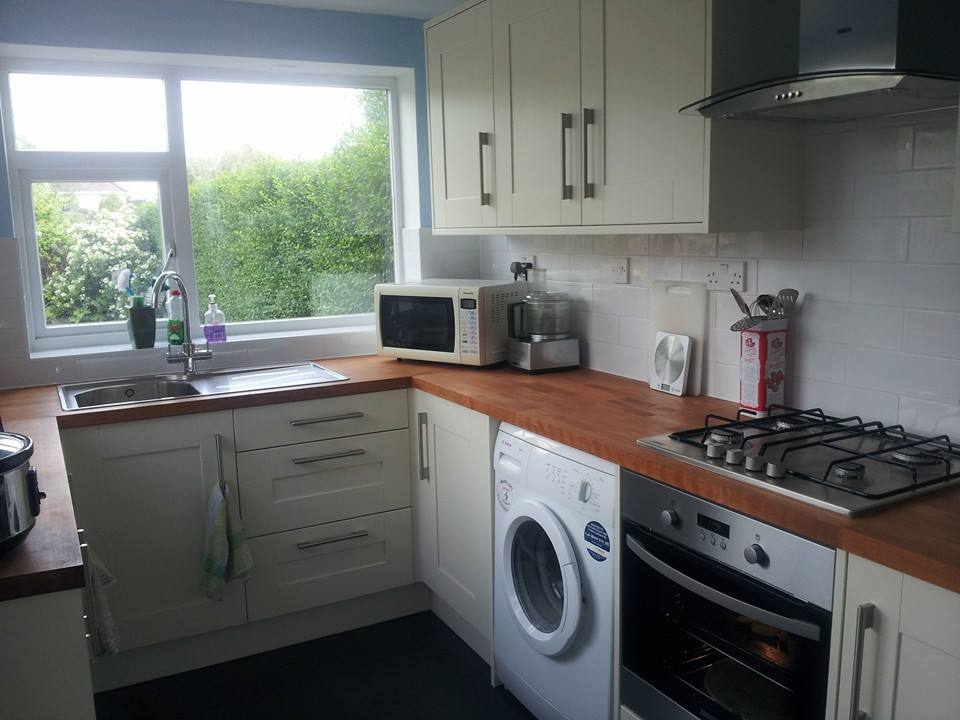
2. I have a new kitchen

And it is a thing of great wonder and prettiness, at least until the first time I spill something in it and stain the worktop. After which it will be ruined for all eternity, but for now there is much wonder and prettiness and baking.

kitchen


3. Sweet Nothing is up for an award

See how I saved that one for third, so I could appear all nonchalant and not at all giddy about it. My debut novel, Sweet Nothing, is in contention for the Joan Hessayon Award. I’m not expecting to win. There are 17 contenders in total, so as the woman who wrote a romantic comedy about a mathematician, I have to acknowledge that 1 in 17 isn’t brilliant from a probability perspective, but I get a trip to London town where I will wear clothes that aren’t pyjamas and drink wine and get to do my best impression of a ‘nominated for an Oscar but didn’t win’ face.


4. There are European Elections coming up..

… in which I am led to believe UKIP are expected to do marvellously well. I find this disheartening for a whole range of reasons (some of which I banged on about previously here). The thing I mainly find disheartening though, is the quality of political journalism at the moment. It feels like nobody in the mainstream media is actually looking in detail at any of the party’s stated policies and pointing out the claims and assumptions that are simply untrue. There are some really good sites online that do this sort of thing (eg Channel 4’s FactCheck blog) but they don’t form part of the newspaper headlines or the nightly TV news, which is where most people get their information. It is all very weary-making.


5. And an audiobook

Back in writer land, the other excitement of the week is that the audiobook version of Sweet Nothing is now available to pre-order as a download from Amazon. I’m ridiculously excited about this. An audiobook sounds very much like something what a proper author might have.


So mountain, kitchen, award, elections, audiobook. Those are the things that are going on around here, along with a switch to Friday’s for my ‘regular’ blog day. At least I’m intending it to be regular, but you know what I’m like. Anyway how are things with you merry blog-reader?

In which I wonder whether it’s worth going over this same ground again

I was going to blog about the Mail on Sunday’s piece* about Trussell Trust foodbanks that ran this weekend. I was going to point out that their account of a reporter being given food ‘no questions asked’ actually details the range of questions they were asked. I was going to rant a bit about the faux outrage that someone had had more than the usual 3 food parcels per year, as though it’s neither possible nor plausibly justifiable that individual circumstances might fall outside normal expectations. I was going to point out that as an exposé the whole piece is entirely misplaced. The Trussell Trust is a charity – so long as it’s acting legally and within its own constitution it isn’t governed by the need to avoid snivelling outbreaks of faux public offence. I would probably have finished by bemoaning the overall tone of the article – the view of humanity that says ‘these people who are different from me are out to get something, and they much be stopped.’

And at that point I decided to stop myself. Rather than expending anymore mental energy decrying the inhumanity of the Mail on Sunday, I’m going to take another path. I’m going to focus on offering some suggestions for how we might best deal with the Mail’s (and any other papers treading a similar path) spluttering fury in future. Essentially, the Mail (both Daily and on Sunday) is best viewed as an elderly and increasingly confused relative. The modern world scares them, and they’re becoming more and more convinced that the nurses are trying to take their jewelery. From time to time that confusion and disorientation comes out as anger, xenophobia, sexism and racism. The best response to this, given that we are dealing with a confused elderly person probably showing early signs of dementia, is to pat them politely on the hand and continue our conversation as if they’d never said anything at all. We could try to argue, but they won’t understand, and it would probably only add to their increasing paranoia and sense that there is some great rainbow-coloured evil out there that’s out to get them.

So that’s my new resolution, from now on I will view faux outrage clickbait articles in the media with a sort of weary patience. I refuse to get angry, because anger, like agreement, is a response, and it’s a market where any response at all translates into profit. Page hit figures don’t record whether readers were nodding in agreement or rolling their eyes. So instead of doing anger and outrage I shall do happiness and positivity. I shall remember that most people are perfectly pleasant and far too preoccupied with their own lives and families to be interested in hurting anybody elses. I shall remember that most people who use food banks do so because they’re in a really desperate situation and are thankful for whatever help they can access. I shall remember that most people who migrate to this country do so because they want the sort of stability and security that most people who already live here view as fundamental rights, and the accident of being born somewhere on a different side of some ocean shouldn’t remove those rights. And finally I shall remember that the nurses have no interest in stealing my jewelery.

But then, at some point, I’ll trip over some other article in some other rag that presents bile and venom as if they were actual news, and all my good intentions will fall by the wayside and I’ll be ranting on twitter with everyone else. And even though I’ve just established that that is Wrong, it will, in its own way, also be Right, because occasionally you do have to get angry and not turn a blind eye. Sometimes you do have to point out loudly and clearly how completely out of order a particular point of view is. It’s deciding when it’s worth the energy that’s the tricky bit.


*The article is here (http://www.dailymail.co.uk/news/article-2608606/No-ID-no-checks-vouchers-sob-stories-The-truth-shock-food-bank-claims.html). I’ll leave it to you to decide whether to click the link. It’s a click bait article, so if you’re clicking in order to be outraged remember that that’s what the paper’s publisher wants you to do.