Blog

In which a dead twelfth century monarch inexplicably goes street

A funny thing happened to me this afternoon. I was drafting a short story for 42-Worcester, a local spoken word event focusing on the ghoulish and the speculative end of fiction. It’s an event I go along to quite often but very rarely perform at, because I tend to write novel length frothy romance, which wouldn’t quite be ideal to read aloud in a ten minute slot at a sci-fi and horror night.

Anyhoo, next month I’m down to perform and I was whipping together a little ghostly delight to share with the group; I alighted on the idea of writing about the ghosts of Worcester Cathedral focusing on Prince Arthur, the elder brother of Henry VIII, who is buried in Worcester. All was going swimmingly until the ghostly Arthur struck up a conversation with the even more longevitously deceased King John, and the dead twelfth century monarch starting talking like a 1990s rap wannabe.

“Wassup bro?” he said. This startled me somewhat, not simply because that’s a teeny bit anachronistic for a man of regal birth who died in 1216, but also because I had no idea he was going to say it, and still have absolutely no clue why he did. That is very very wrong. Ghost King John is fictional. He exists only inside my head. He should not say things if I don’t know why he’s saying them.

There is with writing, as with pretty much all creative endeavours, a sweet spot, where you get into a groove and the words just flow without very much conscious thought. It’s a beautiful and liberating thing. It happens, for me at least, for about five thousand words of an eighty thousand word book. The rest is sheer effort, but you stick with it in hope of alighting upon another few hundred words of magic carefree writing bliss.

King John going all street was beyond that though. This was a line that I typed with my own typing fingers which are attached to my typing arms which are attached to my shoulders which are attached to my neck which is attached to my head, which puports to contain my brain, and as soon as I’d typed them my brain yelled, “What?”

Ghost King John had properly gone rogue, beyond the control of his author. There are reasons history remembers him as Bad King John, and I’m increasingly convinced that an unwillingness to conform to his designated character arc is probably one of them. Bad Bad Fictional Ghost King John.

So that was weird. I mean, it’s totally fine. I can just go back and delete him. That’ll show him who’s in charge around here, but it leads me to a question for the writers out there – what do you do when a character goes rogue? Go along with it for the ride, or briskly reign them back onto the plan?

In which I read a Bad Book

It is one of the small sadnesses of writing fiction, that doing so can break the pleasure of reading. It’s like being a magician at a magic show. You can be impressed at the skill on display. You can feel professional respect for the fellow conjurer on the stage, but if you can see too much of the craft you don’t actually get the thrill of feeling the magic. Occasionally, a book comes along that’s so good, or so far outside your own writing experience, or both, that it forces you to switch off your analytical writing brain and just enjoy the story, but a lot of the time you find yourself thinking, “Oh. Very good. I see what you did there, ” rather than just “Wow!”

Occasionally the opposite happens. A book so bad comes along that rather than thinking “Wow,” or “I see how that works,” you just think “How?” How did this get past an editor? How did this get published in its current form? Just how? I am currently reading just such a book, and, rather churlishly you might think, I’m not going to tell you what it is. There are reasons. Firstly, any book review is subjective and I resolved when I started this blog that I would only post reviews that were at least 51% positive. Secondly, I’m a member of more than one professional organisation for authors. I meet other writers. I’m also English and middle-class and therefore prepared to do pretty much anything to avoid potential future confrontation or social discomfort.

Anyway, this book is a mainstream published book by a successful “Sunday Times bestselling” author. It’s not a debut. It’s not a poorly edited self-published tome by an enthusiastic newbie to the writing game. Looking at it’s Amazon reviews, it’s a book some people have loved. As I said, my opinion is entirely subjective. However, what I don’t think is subjective is that this book almost certainly wouldn’t have attracted the attention of a publisher or agent if it was a debut. It commits many of the sins that newbie writers pay good money to conference organisers, creative writing teachers and writing consultancies to be warned against. The setup for the story is long, so long, too long, taking up about a third of the book. Then about halfway through the style of the story changes so you’re not reading the sort of book you thought you were at all. The writer headhops – jumps between the points of view of different characters – abruptly and without obvious reason. Headhopping isn’t a writing sin because it’s inelegant; it’s because it’s really confusing for the reader, and as a reader, in this case, I was really confused.

And in a sense, so what? A debut novel doesn’t just have to be as good as the general malaise of stuff out there in your genre. It has to stand out. I know plenty of talented writers who had novels rejected not because they weren’t good, but because they weren’t stand out enough to be a debut novel. Some of those “not good enough for a debut” books were then published very successfully as novel 2, 3 or 4.

I wonder though whether there’s a point of success where quality control ceases to be a consideration. Reading this book, my natural urge, as a writer, is to get a pen and a notepad and start to make editing and revision notes. It feels like an unedited draft, rather than a finished novel. More than anything I’m confused by that. I don’t understand how the novel got through an editing process in its current form. Maybe the writer is at a level of success where the publisher reckons their work will sell regardless. Maybe the writer knows it ain’t a great book, but was pressured by contractual and commercial obligations to put it out. I don’t know. Lack of editing though, is one of the criticisms used by mainstream publishers to bash the self-publishing sector. Sometimes that criticism is justified, but as a criticism of a whole sector of an industry it’s too much of a generalisation, especially when the big publishing houses are putting out their own, albeit possibly smaller, share of poorly edited material.

So that’s my confusion for this week. Feel free to chat about bookly things in the comments – particularly bad books, poorly edited books, books you wanted to chuck across the room. Off you go.


In which I acknowledge and extol the virtue of doing a Good Thing

It cannot be denied that this little blog can, on occasion, be a place where I have a little rant or moan about one or more of the irritants I have noticed around me. Those irritants range from major (Michael Gove) to minor (excessive book promotion on twitter), but I have had a little moan about them all.

Today, however I’m adopting a different approach and taking a few minutes to concentrate on the positives and extol the virtue of us each doing a Good Thing. It’s easy to look at the world, see all the problems around us and conclude that it’s way way too big for any one lonesome soul to make a difference. It’s easy to feel a little bit defeated and conclude that when it comes to changing the world it’s easier all round not to try. Recently, however, two things have passed by my butterfly brain that have made me want to whoop and holler in praise of those of us who do try.

The second thing, which for reasons of narrative build, I shall tell you about first, was this tweet from Citizens Advice:

100 people becoming volunteers every week with just one organisation. That’s incredible. Think for a second about how many people must give their time for free across the country, not just in Citizens Advice Bureaux, but in charity shops, schemes to help the elderly, play schemes, animal shelters, homelessness charities, youth groups and all the other random and diverse things people do to help their communities and to help people across the world. Jolly well done all of them, and if you are one of them, really jolly well done you.

The second thing that made me want to run across the internet and give the person involved a big ol’ high five, was this project from Rowan Coleman. Rowan has decided to donate all of the royalties from her next book, a novella titled Woman Walks Into A Bar to Refuge, a charity that works with victims of domestic abuse. According to her blog, she’s aiming to raise £10000.

In my non-writing life I have worked directly with people who were living with domestic abuse, or with the aftermath of past abuse, and I was struck, every single time, by how utterly normal those women, and occasionally men, were. Domestic abuse isn’t something that happens to people who are weaker, or less confident, or less able than us. It happens to people like us. I really hope that the good thing that Rowan is doing makes a difference to some of those people.

So, here’s my suggestion, lets all follow the example of those rather wonderful volunteers, and of Rowan Coleman, and agree that this week we shall do a Good Thing. One Good Thing, for example, would be to hop over to Amazon and pre-order Woman Walks Into A Bar. Another would be to do a spot of volunteering. It is, of course, entirely up to you. Personally I have already ordered Rowan Coleman’s novella, so my Good Thing will be to fill in the final paperwork to donate my brain to the good people at Parkinsons UK to help with research into Parkinsons disease. Obviously they only get my brain after I’ve died. I’ll be using it up until then, sometimes as much as two or three times a week. I’ve had the final forms on my desk for months. This week I shall actually finish filling them in and send them back. Easy. One Good Thing done.

It is, of course, possible that you are not really into doing Good Things and are working more of an Evil Genius lifestyle vibe. In which case,  maybe you could still try a Good Thing just for variety. You never know. You might like it. Either way, lets be a little bit celebratory, shall we? So please, tell us about the Good Things you do, or are going to do forthwith.

In which there is a little scandalette and it gets me thinking

Demonstrating the dizzying pace of the modern news agenda a small political storm has brewed and passed over just in the time I’ve been sitting here trying to decide what to blog about.

The Electoral Commission in the UK releases quarterly figures showing donations made to political parties. The figures released today showed a bequest for half a million which was split between the two Coalition parties. A little bit of light journalistic digging showed that the bequest was made in the will of a Joan Edwards who specified that the money should go to “whichever government is in office… in their absolute discretion to use as they may think fit.” It was speedily pointed out that thinking fit to keep it for yourself was probably not quite in the spirit of the thing, and within a morning both the Conservatives and the Lib Dems had conceded the point and agreed to hand the money over to the Treasury. Cue many editorials about the grasping nature of modern politicians and their lack of engagement with the notion of public funds for the public good. Some of those editorials may even be wise and worth reading, because, yes, if you’re the government and you get a wodge of cash to spend as you “think fit” and your first thought is that you could use it to pay for a better wine selection at your party conference then shame on you.

However, my first thought on reading this story wasn’t about how disappointingly grasping and self-serving the politicians involved seem to be, it was about the bequest itself. Somewhere out there a woman decided to leave half a million pounds to the government of the day, not knowing, presumably, which party that would be or how they would choose to spend the money. I can’t decide whether that demonstrates a refreshing faith in government and democracy or simple naivete. Maybe it’s neither – maybe the woman in question had fallen out with her local cats’ home and left the money to the government just to spite them.

What I am fairly sure about is that I wouldn’t do the same. If I had half a million pounds to spare (and a quick rummage under the sofa cushions confirms that I don’t), I can imagine wanting to use the cash for the greater good. I am a proper hippy bleeding heart liberal after all. I believe in outdated stuff like the welfare state and universal healthcare and higher taxes for the comfortably-off. But to voluntarily bequeath half a million to the government of the day like Joan? I don’t think so. And there are three reasons why not:

1. I’m a bit of a control freak. Sure, I want to improve the world with my money but I want to choose how.

2. I want to see what happens to the money. That kind of rules out the whole bequest thing. I think I’d want a scheme where I just went “Here is some money. Please tweet me if you’ve got something cool you’d like to do with it, and I shall pick stuff that sounds good/interesting/worthwhile…” Back to the control freakery again.

3. I don’t quite trust that any political party would definitely use my money for the greater good, and that’s a really bad thing. Polls repeatedly show that the British public lack faith in their politicians. This Ipsos MORI poll from June 2013 is a good example, showing the extent to which we believe our politicians to be self-serving. It is, therefore, really annoying when they act in ways that reinforce that belief. After expenses scandals, and previous question marks over party funding, politicians should be going out of their way to clean up their act, rather than opportunistically divvying up bequests between themselves. Perhaps that perception is that if the mistrust extends across the party divides then there’s no comparative loss if the public don’t trust you, because they don’t trust the other guy either.

And at this point I feel I should have a pithy conclusion as to how to fix the break down of trust between electorate and elected, but I don’t I’m afraid. Feel free to offer your suggestions in the comments. And feel free to share your spending plans for any unexpected (or, indeed, imaginary) cash you might have lying about.

In which I witter on about self promotion and sisterhood

Ahoy, hello and indeed howdy one and all.

Reading it back I suspect that was probably a greeting that needed more commas, but I can’t quite work out where to put them so I’m going to move on and hope nobody noticed.

Right.

I’m also going to skip over my normal paragraph about being a bad blogger and promising to eat my bloggy fibre and be more regular in future. Best laid plans and all that…

So, anyway, this week I am mainly thinking about self-promotion. It’s a bit of a tricky topic for us budding writers out here in InternetWorld. If you hop over to Twitter you will find that the only form of tweet even nearing the ubiquity of “Buy my book,” is the humourous ranting tweet about the number of tweets saying “Buy my book.”

In addition to the relatively benign “Buy my book” tweeters, you also get the real hardsellers who send DMs (private one-to-one messages on twitter) instructing you to buy their book and write an amazon review, or demanding that you like their facebook author page. Those people are beyond the pale and should be rounded up and taken away to a place where someone can have a stern word with them and then they can sit for a bit and think about what they’ve done.

All of which is a bit tricksy for us writerly types, because ultimately we do want you all (every single last one of you) to BUY THE BOOK. Fortunately, I am here to save budding writers from this nightmarish social media stressfest, with my completely considered, not made up on the spur of the moment at all, RULES FOR ONLINE PROMOTION.

1. Tweeting or Facebooking a single line from your novel won’t make anyone buy the book. No single sentence is that amazing. If Shakespeare had been @shakespearebard and had tweeted “‘To be or not to be’ Brilliant new story: HAMLET! Out now ” he would have essentially managed to make Hamlet sound a bit meh. Bad Shakespeare. And Bad Twitterers. Bad.

2. Don’t tweet or message me just to ask me to like your Facebook page. Have a facebook author page by all means. I’ve got one. It’s fine and dandy. It means that you can keep your personal facebook and your public/work/writerly facebook separate. But the point of having it isn’t just to attract likes. Presumably the point of having it is to allow you to engage with readers in a fun interesting way that ultimately encourages them to BUY THE BOOK. Putting all your energy into getting likes for a facebook page seems like putting your cart before your horse, which is stupid because horses are notoriously poor at pushing stuff. Facebook likes aren’t an end in themself. Remember that people.

3. It is ok to tweet or retweet links to reviews, blogposts and news stories about your book, but it’s not ok if that’s all you tweet or all you put on facebook. Twitter’s tagline is “Join the conversation,” not “Shout promotion at strangers.” For every explicitly promo-y tweet set yourself a target of at least three tweets about your breakfast. Everyone loves breakfast. No-one loves having promo yelled at them across the interweb.

4. Be interesting. And if you only adhere to one of these rules, make it this one.

So in summary, facebook author pages are like horses. You need to be careful about where you put your cart, and be interesting. That is all dear readers. That is all.

Actually no, it isn’t! I’m not usually a fan of blog chainy type things, for similar reasons that I’m not really a fan of blog awardy things, which I explained back here. However, this week I was tagged in this:

by the rather lovely Jane Lovering, and the concept didn’t actually offend me so I shall play along. The idea is that we’re sharing the love between cool and interesting women bloggers who we admire. Jane has already tagged my fellow Choc Lit newbies, Rhoda Baxter,  Janet Gover and Jules Wake, and so I’m going to add the following:

Laura E James – one more Choc Lit Newbie. The Dear Mum post on 22nd July made me tear up.

Holly Anne Gets Poetic – in the interests of full disclosure I’ll acknowledge that Holly is a close personal friend, but she’s also my absolute favourite poetry blogger out there at the mo’. Read her. She is funny and dark and wise.

Neets Writer – I’m not normally a fan of writers blogging about writing. In fact the amount of writing chat around here at the moment is quite putting me off myself. But Anita Chapman does it well – she’s worth a read.

Kate Johnson -And one more Choc Lit girl to finish things off. The delightful Kate Johnson, who I have just about forgiven for taking MY little cup home from the RNA conference this year. Apparently she won it or something…

And that really is all. Bye bye.

In which I learn some things and wear pretty pretty shoes

Two blog posts in two days! It’s all go here. I’m aiming to post again tomorrow in a more normal random thoughts and rantings sort of way, so that would be three in three days! Don’t hold your breath though peoples – I think we all know that probably ain’t gonna happen.

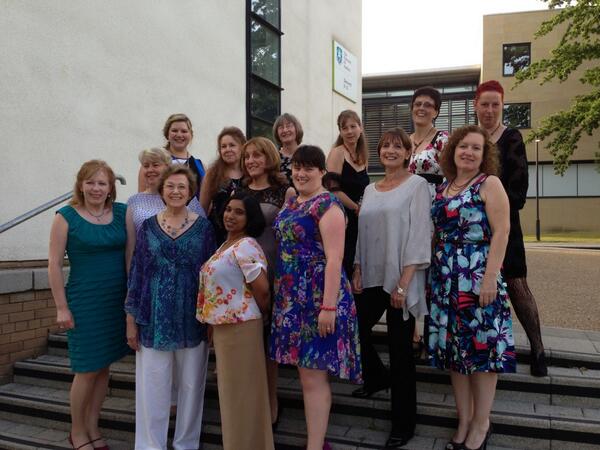
Anyway, this weekend I have been at the Romantic Novelists’ Association Conference. It was my 3rd RNA Conference and I’m feeling like a bit of an old hand now. This year was particularly exciting as I was able to announce my first publishing contract which was signed just 2 days before the conference! What? You haven’t heard about that? Seems unlikely given that basically haven’t shut up about it since Friday, but just in case, all the details are in yesterday‘s blog, and I’ll gratuitously share another Choc Lit Authors pic (with me in it!) for you right here:

Choc Lit Authors

So what did I learn at conference this year? There were things, and they were threefold.

1. A nice spider graph about your major theme can help in the planning of your novel

In creative terms, the top workshop of the weekend for me was Julie Cohen’s session on Theme. I’ve been on courses with Julie before. She’s a super good writer and a brilliant teacher. If you’re interesting in novel writing I heartily recommend that you book yourself on one of her courses. I think the details on her website are for this year, but watch that space for future stuff.

Anyway, during Julie’s conference session I surprised myself by knowing very quickly what the core theme for the novel I’m about to start writing is going to be. I can also see ways in which that theme will impact on the characterisation and the interaction between different characters. Realising I’ve already got a lot of that stuff in my brain, and getting some pointers on how those instincts might translate into actual character and plot development, was invaluable given that I’m currently suffering from what is commonly known as Total Paralysing Second Novel terror.

I’ve just contracted with a publisher for my first novel, but what if that was a fluke? What if I can’t do it again? What if there is no second book in my brain? What if there is but I can’t work out how to write it? What if I work out how to write it and it’s just a bit pants? This session didn’t make those nerves go away but it did start to make me think maybe I am just beginning to sort of slightly know a little bit what I’m doing here.

2. I must not procrastinate.

Nina Harrington led a fantastic session on procrastination, specifically on how to avoid procrastination. She talked about how fear can stop us from getting on and doing things by making tasks seem overwhelming. Those of you who reached this paragraph via the traditional route of the previous paragraph will understand that that felt pretty relevant for me at the moment.

She also gave some great ideas for breaking work down into achievable chunks and carving out your precious writing time. Combined with talks from Linda Hooper on time management and Sonia Duggan on writing through your fear, I’ve come away from conference fired up and ready to get stuck into edits and rewrites and cracking on with that difficult second novel. I’ve even written myself a little daily schedule to show where all the writing and editing fits into the day. Hurrah.

3. And finally, these shoes are art. They should not be worn as actual footwear.

So very pretty but so very hurty
So very pretty but so very very hurty.

And that is all. According to my lovely shiny new schedule, I’m supposed to be doing some rewrites right now, so I shall be gone from this place. Bye bye.

In which I clear my throat and offer an announcement

Ahem.

That was the throat clearing. Here’s the announcement.

I am absolutely beyond delighted to announce that I have signed a contract with Choc Lit Lite to publish my first novel. I’m ecstatic to have signed with Choc Lit – they’re a really forward-looking exciting publisher, with a really good reputation for working with their authors and developing new talent. Waaaaaaah!

Obviously I’m a teensy bit excited about becoming a published author, but at the moment the whole thing feels utterly unreal. Fortunately I’ve just spent the weekend at the Romantic Novelists’ Association conference where there were lots of other published Choc Lit authors I was able to poke to check that they were really really real. After they’d got over the poking we even took a big group photo.

In which I appear to be a giant
(taken by Lizzie Lamb)

We don’t seem to have all managed to look at the same camera in this one, and I do appear to be quite huge – there’s a learning point there about not standing at the front when having your photo taken with thin people – but nonetheless it’s a Choc Lit Authors picture and I’m in it! Huzzah!

At this point I do need to thank just a couple of people. You have three choices about how to read this next bit. You can: a) take a very deep breath and just rattle through it as quickly as possible; b) do the full-Gwyneth and read the whole thing aloud with appropriate sobbing; c) scan quickly for your own name and ignore the rest. If your name isn’t there, it’s because I’m stupid and I’ve messed up and missed you out – unless I’ve never met, emailed, tweeted, written, phoned, texted or spoken to you in my life, in which case, seriously, what were you expecting?

So, in no particular order, thank-you to all of the following who have helped, supported, not ridiculed my attempts to do writing…

Deborah Catesby, Dawn Hudd, Holly Magill, Candi Miller, Tamara Bolger, Anne Milton, Lisa Bodenham, Kate Johnson, Julie Cohen, everyone who I’ve been on one of Julie Cohen’s lovely writing courses with, everyone I’ve ever taught on a creative writing course, the entirety of the RNA but particularly Melanie Hilton and the NWS readers, Helen Harron, my mum and dad (if you’re reading this in Gwyneth style you probably need to weep a bit here), the Choc Lit Tasting Panel, everyone else at Choc Lit, Tim Butler, Tony Judge, Dunstan Power, Clive Eardley, Taliah Drayak, Polly Robinson, all the RNA Conference speakers for the last 3 years (every last one of them), Katie Fforde, Greg Mosse, Kate Hill, Deema Davidson, Rich Badley, Eva Cubero, Isabel Phillips, all the lovely writers and readers on Twitter, the RNA Birmingham Chapter, everyone who has let me play at being a writer on their blog – a big hand for Nikki Goodman and the Write Romantics, everyone I’ve got pished near in an RNA kitchen – I’m looking at you Immi Howson, Jane Lovering, Ruth Long, Jules Wake, Talli Roland, Sarah Callejo, Jane Tranter, Denise Deegan, Colette Caddle, Brigid Coady and others too numerous and fabulous to list – and finally EngineerBoy for his most excellent services to engineering and mortgage paying, while I work the whole penniless writer vibe. Thank you all. Some of you will know how you helped. Some of you won’t ever read this or even know who I am, but thank you all the same.

Right. Gushing over. Time to get bum on seat, fingers on keyboard and actually do this writing lark for real. I’ll be back to the blog tomorrow to tell you all about what happened at the RNA Conference this year. Be warned – it will almost certainly involve pictures of shoes.

In which I think about settling down with a good book

Ahoy there and apologies for blogging tardiness. Unfortunately people keep luring me away from my nice safe sofa-laptop bubble by trying to give me money to teach people stuff, which is tiresome, but does lead to having money to buy things, which is nice.

Anyhow, you find me, dear readerist, in a time of great trauma, because, right at the moment, I don’t really have a book on the go.

Now some of you probably won’t appreciate why that’s traumatic. Some of you will be the sorts of people who dip in and out of a book as the mood takes them, and have no more emotional attachment to the idea of reading that they would to a passable movie or the end of a series of Grand Designs (although, I’m not sure series of Grand Designs ever actually end, they just morph without warning into repeats of older episodes). Anyhow, we are a very egalitarian and open-minded blog here. We welcome all sorts of people, regardless of race, gender or preference in flavour of fruit pastel. So you people who aren’t fully fledged Book Types are welcome along with everyone else. I do, however, reserve the right to give you very slightly suspicious glances from time to time, and pop a plastic cover down before I let you sit on the good chairs.

Part of the reason I am without book at the present time, is that I am in the midst of working through the plot for a new novel idea. When I’m deep in a first draft or in working through initial plot ideas, I quite often find that my reading tails off a bit. It’s as if my brain can only be fully immersed in one story at a time. For the same reason, I think, I only ever have one book on the go at any given moment. Some people can deal with more than one. EngineerBoy often has an “upstairs” and a “downstairs” book in progress at the same time. This causes me to peer at him suspiciously quite a lot, and occasionally look at bungalows on estate agency websites as a last resort to break him out of this bizarre and worrying habit.

Right now though, I need a book to read. I’m starting to get a bit twitchy for lack of book. It needs to be absorbing enough for me to get into easily but not so mentally taxing that it interferes with writer brain doing its important story development, and also not so light and frothy that I my brain isn’t engaged at all. It can be fiction or non-fiction. It might even be something that’s already on my not-as-big-as-it-sometimes-is To Read pile, all of which look interesting, but none of which are screaming “Read me now!” in a sufficiently loud voice.

to read pile

So please help me out with suggestions. What books have you properly loved recently and why? And, any writers out there, can you read and write alongside one another or are they just mutually exclusive activities?

In which I go to a science festival

Last week was the week of Cheltenham Science Festival. They like a festival in Cheltenham. They don’t really care what it’s a festival of – horse racing, literature, food, jazz – they are entirely unfussy. So long as there’s a bar and some quality use of marquees the good people of Cheltenham are quite satisfied.

But last week was science. I was only able to get to a few sessions but what I did was suitably fascinating, because here’s the thing. Despite everything that happened in secondary school physics lessons to convince me otherwise, science is quite interesting. Actually that’s unfair. Secondary school physics was also intereating, but that was because my physics teacher was a certifiably insane man who, if you asked for a new exercise book, would drag you over to a picture of then Education Secretary, Kenneth Baker, and shout, “A new exercise book? You’d better ask Mr Baker if you can have a new exercise book. It’s all up to him these days!” He also used to demonstrate gravity by jumping off the table at the front of the room. So, from my secondary school physics lessons I know two things:

1. Education Secretaries personally sign off on all distribution of paper goods to school pupils, and;

2. The laws of gravity are mainly to do with what happens when insane people jump off tables.

Anyhow, what was I talking about? Yes. Science Festival. Right. At the science festival, we saw a live version of Dara O’Briain’s Science Club where we learnt why it’s much worse to drop a dog out of an upstairs window than a hamster. (At least I think that was the main point.) We saw some poor innocent victim (volunteer?) get MRI-scanned live for our entertainment. We saw a massive game of top trumps for science’s great unsung heroes, where it turned out that Hedy Lamarr (of siren of the silver screen fame) was also a proper top notch mathematician.

The best bit for me was seeing Dr Kevin Fong talk about the extremes of the human body’s ability to survive. He’s very clever and interesting, and it’s well worth seeking out his book on the same subject. He does a clever drawing of parallels between our exploration of the planet (and beyond) and medicine’s exploratory journey in relation to the human body during the past 100 years. It’s all jolly interesting and very much to be encouraged.

So science, it turns out, is marvelous, even if you’re a fluffy-headed arts and humanties girl like me. (My degrees are in History and Creative Writing – alternatively known as Old Shit and Makey-Uppy.) Instinctively though, I’m drawn to the belief that stuff is knowable. It’s a thing that frustrates me, in conversation, when the person I’m talking to says, “Of course there are some things that are just beyond our understanding.” It seems to be an attitude that lacks ambition. I also don’t accept that things get less interesting for finding out more about them. So the shape you thought you saw out of the corner of your eye wasn’t a ghost after all? It was your brain interpreting the shape of a face in a plume of steam, or shimmer of light. That’s fascinating. Why would your brain do that? What’s the evolutionary benefit of facial recognition and why would that extend to seeing faces that aren’t there? What else that we think we see is created in our brains rather than in the physical world we think we’re seeing exactly as it is?

So, in summary, finding stuff out is good. Another paradigm shifting conclusion for you there folks. Hurrah!

In which I am a bit randomly reviewy

Back in the day when this blog was a new and shiny thing, I used to post reviews quite often. They the things I reviewed had some sort of vague relationship to each other, like these which have a sci-fi vibe going on. Sadly, my cultural diet of late has lacked an overarching theme, so today’s return to reviewing is essentially my thoughts on three random and unrelated things. They’re not even all the same form of media. Oh well. Here we go – in no particular order.

1. You Had Me At Hello by Mhairi McFarlane

This one is A Book, and a very good book it is too. McFarlane won the Contemporary Romance category at this year’s RONA Awards, which is all very good and impressive, especially considering that this is a the writer’s first published novel.

What I really liked about this book was that it didn’t overwhelm me with cute. I like a good love story. I like a funny romantic comedy, but I don’t like my fictional romances too sweet and sickly. I’m not a hearts and flowers girl, and this isn’t a hearts and flowers book. It’s a book about people who love each other, but it has a realism to it, and the humour feels bedded into the characters rather than layered on as a writerly conceit. It reminded me, in tone, of early Marian Keyes (which is high high praise indeed).

My only real quibble came with the ending of the book, which, although inevitable – this is a romance after all, felt a little bit rushed and easy when it came. That’s a minor criticism though. Overall this one gets a big old thumbs up, and I’ll definitely be looking out for book number 2 from Mhairi McFarlane when it comes.

2. Matilda – The Musical  – Music & Lyrics by Tim Minchin, Book (in musical theatre terms) by Dennis Kelly, Actual Book what it is based on by Roald Dahl. Everyone clear on that? Good. Let’s move on.

So Roald Dahl plus Tim Minchin plus The Royal Shakespeare Company – what could possibly go wrong? Well on paper, quite a lot – can you add jazz hands to Roald Dahl and make his pre-teen macabre prose stage-musical ready? Can you make a musical where the bulk of the cast are small children without the whole thing being utterly sickly? Actually, yes. It turns out you can.

Matilda – The Musical started at the RSC and has now transferred to the West End and Broadway, picking up awards everywhere its been. I saw it earlier this month in London, and can confirm that all the plaudits are entirely deserved. The children in it are not annoying. The night we saw it, Matilda was played by Lara Wollington who was completely brilliant, and does the majority of the actorly heavy lifting in the show. Tim Minchin’s lyrics and tunes are fantastic. Some of the choreographed set pieces are incredible, particularly the sequence where the adult dancers in the show climb a structure that’s being constructed around them. The funny bits are actually funny, especially those centred around David Leonard as Miss Trunchbull.

Two weeks later I’m still finding myself singing bits from the show. If you get the chance, go see it. It’s very very good indeed.

3. Star Trek – Into Darkness

So I’ve read a book. I’ve seen a musical. Now I’m going to the modern cinematic picture house. This is the second film in JJ Abrams’ twenty first century Star Trek reboots, and I, for one, liked his first attempt very much. There are definitely some good things about this film. If you’re a casting director looking for “superior, intelligent, quite quite insane” you call Benedict Cumberbatch, and feel satisfied that you’ve done your job well.

There are other good things too. Zachary Quinto was good as Spock in the previous Star Trek outing. He’s still good now, although even he looks slightly confused as to why he’s dating Uhuru.

In places, Simon Pegg as Scotty is quite funny (once you’ve got past the accent). Unfortunately, he’s also clearly appearing in stylistically quite a different film from anyone else. There are lots of examples (Buffy and Doctor Who spring to mind most obviously) of successful sci-fi/fantasy mixing high drama and comedy successfully. Weirdly, in this film the “doing comedy” seems to have been allocated to one actor who ploughs a lonely parallel furrow to the rest of the action.

And what action it is. We run. We jump into a volcano. We shoot stuff. We blow  stuff up. We crash our spaceships. We run some more. Oh my word, how much we run. But that’s all action, which isn’t quite the same thing as drama. Plotwise, it’s a bit of a mess. The initial story idea of a lone terrorist wreaking revenge on the Federation is strong. Souping that up a bit with the bubbling under of the increasingly warm cold war with the Klingon Empire is interesting too. But at that point, we’ve probably got enough plot for one film. Unfortunately, that’s not the point at which this film stops. It feels like everyone in the writers’ room was allowed to contribute an idea, and the director didn’t have the heart to tell anyone that theirs wasn’t going to be included.

We’re also on an Enterprise where no-one is particularly good at their job, or even of above average intelligence. Strange woman just lied and faked her identity to get onto your top secret military mission? Why not put her in charge of the massive experimental weapons? Why not indeed? And I’m not even going to start on the scene where the same woman pops her clothes off in front of a senior office for no identifiable reason, other than to note that it gave me a flashback to Lost In Translation, where Scarlet Johansson spends a lot of the film being moody and thoughtful while looking out of a window, but always always finds a moment to take her trousers off first.

So, Star Trek Into Darkness overall would be a ‘could do better.’

And that is all for today. Have you read or seen any of the above? What did you think? Or do you have any other cultural excitements to recommend to the group? Take it away…